

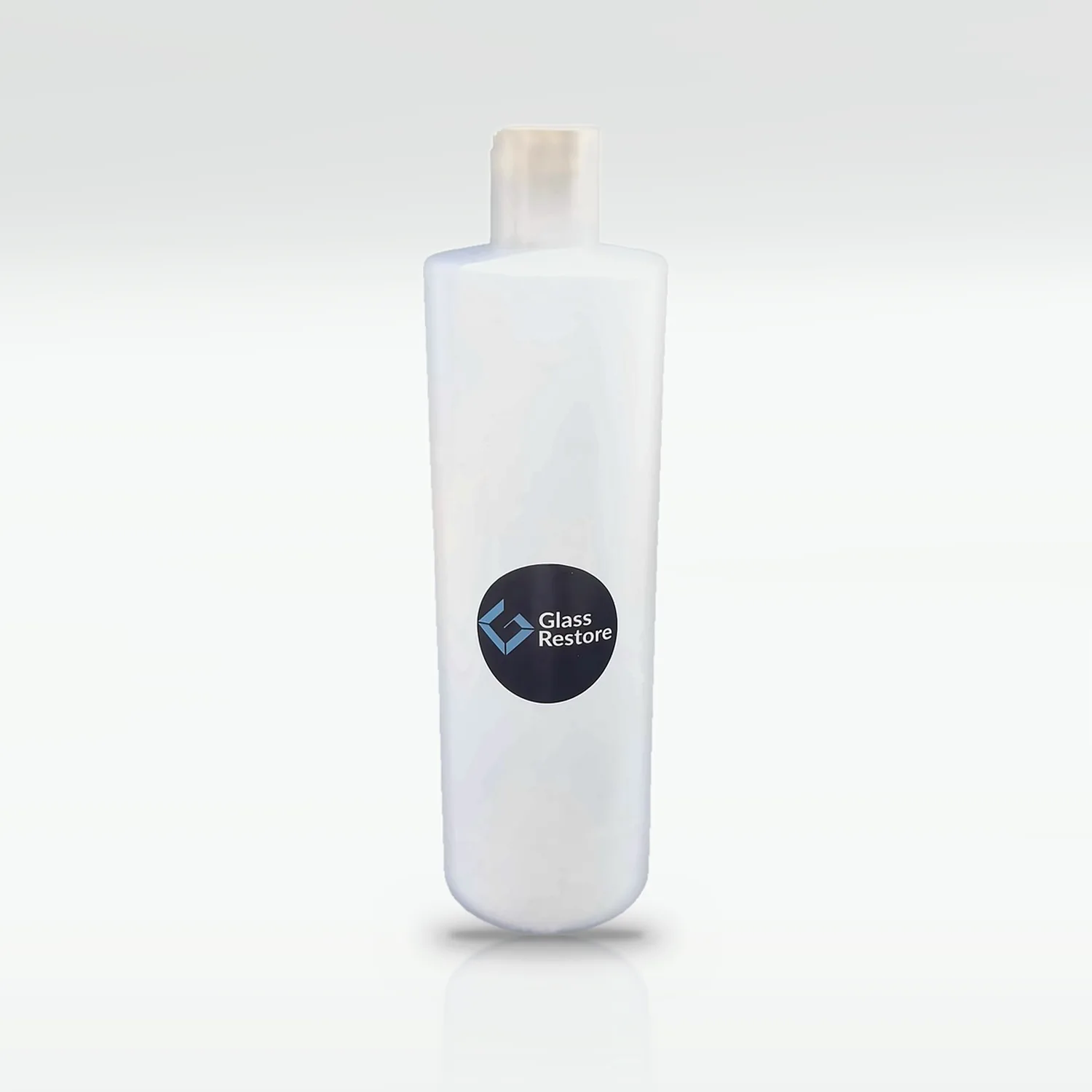
Professional grade glass polishing compound — a proprietary blend of rare earth minerals and abrasives, pre-measured into a 16 oz mixing bottle. Add water, shake, polish. This is the Step 7 finishing compound, the one that takes the fog off the glass after correction and leaves it clear.
THE FINAL STEP, AND THE ONE THAT SHOWS
Every earlier Step removes damage. This is the Step that decides whether the job looks finished. After Steps 1 through 5 the scratches are gone but the glass is fogged and hazy — that fog is normal, and this compound is what removes it.
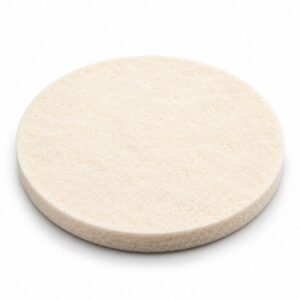
Used on the Step 7 felt pad, it is the premium final polishing stage: deep scratch restoration, acid-etched graffiti, expensive storefront glass, and any job where the customer will stand a foot away and look for it.
WHY THIS GLASS POLISHING COMPOUND OUTPERFORMS THE REST
The unique blend of abrasives quickly removes surface stains and residual repair blemishes, while the advanced polishing agents return the glass surface to like new condition.
Most compounds on the market are single-grade — one abrasive size, tuned for one situation. That is why they work on one job and disappoint on the next. This one combines several abrasive sizes in a single formula, so the same bottle performs on light haze and heavy correction, on tempered and annealed glass, on a cool shower panel and on a hot storefront pane in the afternoon sun.
One bottle, every condition. No second grade to buy, no guessing which one to reach for on site.
WHAT IT REMOVES
• Fog, haze and cloudiness left behind after polishing — the reason this compound exists
• Surface stains and residual repair blemishes
• Hard water spots and mineral deposits
• Light surface marks and wiper marks
• Dull, tired glass that has lost its clarity
IT WORKS WITH THE PAD SYSTEM YOU ALREADY OWN
This glass polishing compound is a finishing product, not a consumable locked to one brand of pads. Use it on the Step 7 felt pad in the Glass Restore system, as the restock for the liquid compound that ships in the Commercial Kit, or on any 5″ felt or white polishing pad from any disc-based correction system. If your discs cut the glass, this is what makes it clear again.
WHAT IT WILL NOT DO — AND WE WOULD RATHER SAY IT NOW
This compound polishes. It does not grind. If you can catch the damage with a fingernail — a deep scratch, acid etching, scored graffiti — no polishing compound will remove it, this one included. That damage has to be ground out first with the Glass Restore Step pads. This is what finishes the job afterwards.
Do not use it on tinted, coated or Low-E surfaces. Coatings sit on the surface and polishing takes them off. Work the bare glass side, and test a small area first. It is also not a windshield product — laminated auto glass distorts easily under heat and pressure. Side glass is fine; windshields are their own discipline.
HOW TO MIX AND USE IT
Mixing this glass polishing compound takes about a minute.
- Eye protection and a proper respirator before you open the bottle. The dry powder is respirable — N95 at minimum, P100 if you do this for a living. Not a bandana, not a surgical mask.
- Add clean water up to the fill line and leave two fingers of air at the top — the slurry needs room to move or it will not mix. Cap it and shake for 30 seconds until it is smooth and milky, with no dry pockets at the bottom.
- Wet the glass and the pad. Squeeze the slurry onto the Step 7 felt pad on a 5″ backing pad.
- Polish at 2,500–3,500 RPM, pad flat, surface wet at all times. Never let it run dry. Keep the glass cool enough to rest your hand on — heat is what distorts and cracks a panel, and by the time you can see it, it is too late.
- Wipe down and inspect against both a dark and a light background before you call it finished.
Re-shake every few minutes; the abrasives settle fast. Mixed slurry keeps for weeks in the same bottle.
PROFESSIONAL GRADE GLASS POLISHING COMPOUND — SPECS
• Volume: 16 oz bottle
• Formula: proprietary blend of rare earth minerals and abrasives
• Stage: Step 7 — the final polishing stage
• Form: pre-measured dry powder — you add the water
• Bottle: HDPE with disc-top cap; mixes, stores and dispenses from the same container
• Machine: variable-speed polisher holding 2,500–3,500 RPM. An angle grinder will not work, not even one with a speed dial
• Use on: flat glass, shower doors, storefronts, mirrors, glass railings, auto side glass
QUESTIONS WE ACTUALLY GET
Why not buy cheap loose polishing powder instead?
You can, and it will be single-grade, sold by weight rather than by job. You get a bag, a plastic scoop and no answers — how much powder, how much water, what RPM, which pad, when to stop. Then you find it clears haze on one job and stalls on the next, because one abrasive size cannot cover every glass and every condition. This is blended for the full finishing range, pre-measured, and it mixes in the same bottle it is applied from.
Is this the refill for the kits?
Yes. The Commercial and All-in-One kits ship with this same 16 oz compound for the Step 7 felt stage; this bottle is the restock for it. The Starter Kit finishes at Step 6, so this bottle is what extends it to a Step 7 felt finish.
Fog came back after I finished. Why?
Two causes, always. Either a Step was skipped somewhere between 1 and 5, or the final pad did not get enough time. Go back, work the missed Step, and give the finishing stage longer than feels necessary.
Can I use it by hand?
On a spot the size of your palm, with a felt pad and patience — yes. Anything larger needs the machine. Hand pressure will not hold consistent contact across the surface, and uneven finishing shows up as distortion in daylight.
NOT SURE IF THIS IS THE RIGHT COMPOUND?
Send a photo of the damage and the glass size to support@theglassrestore.com. We will tell you which Step to start from and whether this glass polishing compound is what your job needs, before you buy.
Free shipping across the US · international shipping calculated at checkout.



Jose F. –
As a window cleaner, I tested this on a storefront panel with repair haze; on a 3-foot pane under late-afternoon light in a showroom, after dividing the work into three sections, with the worst area at the sun-facing side, I kept the felt pad flat with light pressure, and the clarity came back evenly. I compared this with my previous powder on a office partition; on a 8-foot pane under fluorescent light in a restaurant, after dividing the work into two sections, with the worst area at the top corner, it felt less annoying than juggling two grades of loose powder, and the last traces of fog were gone. I do not use this as a shortcut for damage removal; on a 10-foot pane under natural side light in a house, after dividing the work into two sections, with the worst area at the sun-facing side, once the patio door was corrected, the remaining faint surface haze polished out and the surface lost that milky cast.
Ismael W. –
I used the bottle on a glass railing after correction, where the last bit of fog after scratch work remained; on a 4-foot pane under fluorescent light in a hotel, after dividing the work into five sections, with the worst area at the lower edge, the final polish looked even from edge to edge. My old powder sometimes left me guessing, but on a annealed window with light mineral spotting; on a 3-foot pane under low-angle morning light in a service bay, after dividing the work into two sections, with the worst area at the inside face, this felt simpler than measuring out my previous compound. I use this only after the real correction work; on a 10-foot pane under strong LED light in a showroom, after dividing the work into two sections, with the worst area at the inside face, on a retail door with residual cloudiness, the finishing pass left it so the pane looked noticeably clearer.
Victor J. –
Great results every time
Danny J. –
Clean product does the job
Sergio K. –
Strong polish every time
George H. –
Consistent compound on showers
Cesar D. –
Reliable finish with felt
Noah B. –
Really impressed with this compound
Roberto R. –
Solid finish very happy
Elena T. –
I bought this for finishing work rather than heavy correction; on a 7-foot pane under low-angle morning light in a retail store, after dividing the work into three sections, with the worst area at the top corner, the office partition had water spotting near the edge, and the pane looked noticeably clearer. For a cleaning-company owner, a consistent last step matters; on a 10-foot pane under natural side light in a retail store, after dividing the work into five sections, with the worst area at the sun-facing side, this patio door finished so that the cloudy look disappeared.
Danny M. –
Instead of adding pressure on the annealed window, I kept the felt pad flat with light pressure; on a 7-foot pane under natural side light in a service bay, after dividing the work into five sections, with the worst area at the inside face, that was when the mineral film released cleanly.
Matt V. –
Strong compound very happy
Ryan P. –
During a maintenance call, I used it on a shop window with mineral buildup; on a 6-foot pane under fluorescent light in a apartment building, after dividing the work into three sections, with the worst area at the top corner, I inspected more often, and the panel stopped looking dull. For my work as a installer, repeatability matters; on a 3-foot pane under overhead shop light in a restaurant, after dividing the work into three sections, with the worst area at the door-handle side, the glass railing had hard-water residue, and the final polish looked even from edge to edge. I used less pressure on a annealed window with light staining; on a 4-foot pane under overhead shop light in a office, after dividing the work into five sections, with the worst area at the inside face, the slower approach gave me a finish where the surface finally looked finished.
Thomas H. –
My first real use was a tempered window showing dullness after correction; on a 4-foot pane under overhead shop light in a showroom, after dividing the work into two sections, with the worst area at the top corner, I mixed the slurry in the bottle and shook it again halfway through, then the cloudy look disappeared. I keep this for jobs where a hotel shower panel ends up with an uneven final polish; on a 4-foot pane under fluorescent light in a retail store, after dividing the work into five sections, with the worst area at the center area, the repaired area blended in much better. The large interior pane looked acceptable straight on but still showed a cloudy final finish; on a 10-foot pane under strong LED light in a retail store, after dividing the work into two sections, with the worst area at the sun-facing side, another wet finishing pass got it to where the glass checked clear under side lighting.
Omar R. –
Reliable compound does the job
Blake N. –
Good product works well
Brandon D. –
I do not use this as a shortcut for damage removal; on a 9-foot pane under strong LED light in a hotel, after dividing the work into four sections, with the worst area at the lower edge, once the older flat-glass pane was corrected, the remaining the last bit of fog after scratch work polished out and the final polish looked even from edge to edge. I bought this for finishing work rather than heavy correction; on a 10-foot pane under fluorescent light in a restaurant, after dividing the work into three sections, with the worst area at the center area, the glass divider had light mineral spotting, and the surface finally looked finished.
Brad R. –
I use this only after the real correction work; on a 10-foot pane under fluorescent light in a apartment building, after dividing the work into two sections, with the worst area at the sun-facing side, on a property-entry door with light staining, the finishing pass left it so the repaired area blended in much better. Instead of adding pressure on the tempered door, I stayed in a moderate variable-speed range and watched heat; on a 9-foot pane under low-angle morning light in a restaurant, after dividing the work into five sections, with the worst area at the inside face, that was when the glass checked clear under side lighting. My only complaint is that a smaller trial size would help first-time buyers; on a 6-foot pane under strong LED light in a hotel, after dividing the work into four sections, with the worst area at the lower edge, that was the one thing I would change.
Marco L. –
Strong product works great
Melanie P. –
Reliable results does the job
Damon L. –
I like that the dry mix stays sealed until needed; on a 4-foot pane under overhead shop light in a apartment building, after dividing the work into five sections, with the worst area at the top corner, I re-shook the bottle after the abrasives began settling for the storefront panel, and the surface finally looked finished. My first real use was a office partition showing repair haze; on a 7-foot pane under late-afternoon light in a showroom, after dividing the work into three sections, with the worst area at the top corner, I used the bottle markings instead of weighing loose powder, then the pane looked noticeably clearer. My only complaint is that I wish there were a larger contractor refill; on a 3-foot pane under natural side light in a showroom, after dividing the work into two sections, with the worst area at the inside face, that was the one thing I would change.
Pete Y. –
The bottle setup saved me from measuring powder on site; on a 9-foot pane under low-angle morning light in a house, after dividing the work into three sections, with the worst area at the door-handle side, on a glass railing with residual cloudiness, I used a five-inch felt pad without leaning on the machine, and the glass checked clear under side lighting. I filled the bottle to the mark and shook it until the slurry looked even before touching the annealed window; on a 6-foot pane under overhead shop light in a retail store, after dividing the work into five sections, with the worst area at the lower edge, I kept the felt pad flat with light pressure, and the mineral film released cleanly.
Oscar H. –
Great product buying again
Corey T. –
I compared this with my previous powder on a shower enclosure; on a 6-foot pane under low-angle morning light in a office, after dividing the work into three sections, with the worst area at the center area, it felt more consistent than the single-grade powder I started with, and the surface lost that milky cast. I do not use this as a shortcut for damage removal; on a 4-foot pane under fluorescent light in a showroom, after dividing the work into three sections, with the worst area at the center area, once the shop window was corrected, the remaining a cloudy final finish polished out and the panel stopped looking dull. My only complaint is that I would like a felt-pad bundle option; on a 5-foot pane under overhead shop light in a service bay, after dividing the work into two sections, with the worst area at the lower edge, that was the one thing I would change.
Dennis Y. –
Solid polish less hassle
Chris K. –
I bought the compound as a refill and used it on a glass divider; on a 7-foot pane under overhead shop light in a house, after dividing the work into four sections, with the worst area at the inside face, the main issue was polishing fog, and the mineral film released cleanly. This felt simpler than measuring out my previous compound when I finished a bathroom glass panel that still showed faint surface haze; on a 7-foot pane under late-afternoon light in a retail store, after dividing the work into two sections, with the worst area at the sun-facing side, the finish became much more uniform.
Julio H. –
Reliable product will reorder
Cesar J. –
The compound made the most sense on a display glass with mineral buildup; on a 7-foot pane under low-angle morning light in a hotel, after dividing the work into three sections, with the worst area at the center area, the panel stopped looking dull.
Eric P. –
Clean product with felt
Chris C. –
Nice finish works great
Brad T. –
As a storefront technician, I tested this on a annealed window with repair haze; on a 7-foot pane under natural side light in a house, after dividing the work into four sections, with the worst area at the lower edge, I kept the felt pad flat with light pressure, and the clarity came back evenly. I compared this with my previous powder on a retail door; on a 8-foot pane under fluorescent light in a retail store, after dividing the work into five sections, with the worst area at the sun-facing side, it felt easier to store than an open bag of powder in the van, and the last traces of fog were gone. I do not use this as a shortcut for damage removal; on a 8-foot pane under overhead shop light in a retail store, after dividing the work into four sections, with the worst area at the sun-facing side, once the restaurant front window was corrected, the remaining faint surface haze polished out and the surface lost that milky cast.
Adam M. –
Easy finish works great
Richard M. –
For a installer, a consistent last step matters; on a 5-foot pane under late-afternoon light in a service bay, after dividing the work into three sections, with the worst area at the sun-facing side, this shop window finished so that the repaired area blended in much better.
Max P. –
Reliable polish every time
Max C. –
Reliable finish buying again
Uriel B. –
Good stuff works great
Jose E. –
I keep this for jobs where a older flat-glass pane ends up with residual cloudiness; on a 3-foot pane under low-angle morning light in a retail store, after dividing the work into four sections, with the worst area at the sun-facing side, the glass checked clear under side lighting. The glass divider looked acceptable straight on but still showed the last bit of fog after scratch work; on a 4-foot pane under overhead shop light in a service bay, after dividing the work into four sections, with the worst area at the top corner, another wet finishing pass got it to where the mineral film released cleanly.
Pete T. –
Reliable finish every time
Hector N. –
Good polish buying again
Rafael S. –
Strong product will reorder
Diana T. –
Instead of adding pressure on the storefront panel, I kept the felt pad flat with light pressure; on a 3-foot pane under strong LED light in a office, after dividing the work into three sections, with the worst area at the top corner, that was when the mineral film released cleanly.
Brian T. –
Once correction was complete, the glass railing only needed help with light mineral spotting; on a 5-foot pane under fluorescent light in a house, after dividing the work into five sections, with the worst area at the lower edge, this finishing pass got it to where the reflection looked clean again. I was skeptical the abrasive blend would matter; on a 5-foot pane under low-angle morning light in a restaurant, after dividing the work into two sections, with the worst area at the door-handle side, the annealed window had residual cloudiness, and the clarity came back evenly. My only complaint is that the cap gets messy with slurry on my gloves; on a 9-foot pane under natural side light in a showroom, after dividing the work into four sections, with the worst area at the center area, that was the one thing I would change.
Isaac W. –
Consistent product will reorder
Ray L. –
My first real use was a shower enclosure showing dullness after correction; on a 5-foot pane under natural side light in a service bay, after dividing the work into two sections, with the worst area at the inside face, I mixed the dry powder directly in the supplied bottle, then the cloudy look disappeared. I keep this for jobs where a shop window ends up with an uneven final polish; on a 4-foot pane under fluorescent light in a apartment building, after dividing the work into three sections, with the worst area at the door-handle side, the repaired area blended in much better.
Maria R. –
I re-shook the bottle after the abrasives began settling before touching the lobby panel; on a 9-foot pane under overhead shop light in a restaurant, after dividing the work into two sections, with the worst area at the door-handle side, I stopped to wipe the glass and inspect the reflection, and the finish became much more uniform. On the last tempered window I restored, water spotting near the edge was visible only at an angle; on a 7-foot pane under fluorescent light in a office, after dividing the work into four sections, with the worst area at the lower edge, I worked with a wet surface and steady machine movement, and the finish passed my final inspection. As a window cleaner, I tested this on a hotel shower panel with leftover polishing haze; on a 10-foot pane under low-angle morning light in a house, after dividing the work into two sections, with the worst area at the door-handle side, I checked the pane from multiple lighting angles between passes, and the remaining haze cleaned up.
Alicia V. –
I waited until the glass divider was clean and cool, then worked on repair haze; on a 7-foot pane under overhead shop light in a hotel, after dividing the work into three sections, with the worst area at the center area, the final check showed that the clarity came back evenly.
Damian T. –
Reliable product for glass
Glenn R. –
I use this only after the real correction work; on a 5-foot pane under strong LED light in a restaurant, after dividing the work into three sections, with the worst area at the lower edge, on a display glass with light staining, the finishing pass left it so the repaired area blended in much better. Instead of adding pressure on the older flat-glass pane, I stayed in a moderate variable-speed range and watched heat; on a 8-foot pane under late-afternoon light in a restaurant, after dividing the work into two sections, with the worst area at the top corner, that was when the glass checked clear under side lighting.
Richard P. –
Smooth polish buying again
Anthony W. –
After I made a fresh batch right before starting, the slurry was ready for a office partition with leftover polishing haze; on a 6-foot pane under low-angle morning light in a house, after dividing the work into five sections, with the worst area at the inside face, I used short wet passes rather than forcing the polish, and the last traces of fog were gone.
Milan N. –
I like that the dry mix stays sealed until needed; on a 3-foot pane under late-afternoon light in a retail store, after dividing the work into three sections, with the worst area at the sun-facing side, I kept the powder sealed until I was ready to mix it for the annealed window, and the surface finally looked finished. My first real use was a retail door showing repair haze; on a 6-foot pane under strong LED light in a hotel, after dividing the work into two sections, with the worst area at the top corner, I mixed the slurry in the bottle and shook it again halfway through, then the pane looked noticeably clearer. I keep this for jobs where a restaurant front window ends up with polishing fog; on a 3-foot pane under overhead shop light in a retail store, after dividing the work into four sections, with the worst area at the lower edge, the cloudy look disappeared.
Travis C. –
The bottle setup saved me from measuring powder on site; on a 3-foot pane under fluorescent light in a apartment building, after dividing the work into four sections, with the worst area at the lower edge, on a large interior pane with residual cloudiness, I used a five-inch felt pad without leaning on the machine, and the glass checked clear under side lighting. I left some air in the bottle and gave it a thorough shake before touching the storefront panel; on a 8-foot pane under strong LED light in a office, after dividing the work into four sections, with the worst area at the lower edge, I kept the felt pad flat with light pressure, and the mineral film released cleanly. On the last office partition I restored, light mineral spotting was visible only at an angle; on a 10-foot pane under overhead shop light in a office, after dividing the work into four sections, with the worst area at the door-handle side, I used short wet passes rather than forcing the polish, and the finish became much more uniform.
Trent W. –
Solid polishing compound
Samuel D. –
Smooth results works great
Travis B. –
Smooth compound less hassle
Ricardo M. –
Easy results less hassle
Derek R. –
The older flat-glass pane still had light mineral spotting after correction; on a 10-foot pane under overhead shop light in a hotel, after dividing the work into three sections, with the worst area at the door-handle side, I stayed in a moderate variable-speed range and watched heat, and by the final wipe, the reflection looked clean again. After I mixed the dry powder directly in the supplied bottle, the slurry was ready for a glass divider with residual cloudiness; on a 8-foot pane under fluorescent light in a retail store, after dividing the work into two sections, with the worst area at the inside face, I kept the machine moving and let the compound finish, and the clarity came back evenly.
Blake T. –
The compound made the most sense on a property-entry door with mineral buildup; on a 4-foot pane under late-afternoon light in a house, after dividing the work into three sections, with the worst area at the sun-facing side, the panel stopped looking dull.
Raul F. –
I used less pressure on a patio door with dullness after correction; on a 8-foot pane under fluorescent light in a showroom, after dividing the work into four sections, with the worst area at the top corner, the slower approach gave me a finish where the cloudy look disappeared. The bottle setup saved me from measuring powder on site; on a 6-foot pane under natural side light in a restaurant, after dividing the work into three sections, with the worst area at the lower edge, on a display glass with an uneven final polish, I used less pressure and gave the final stage more time, and the repaired area blended in much better. I filled the bottle to the mark and shook it until the slurry looked even before touching the older flat-glass pane; on a 6-foot pane under overhead shop light in a office, after dividing the work into five sections, with the worst area at the top corner, I stayed in a moderate variable-speed range and watched heat, and the glass checked clear under side lighting.
Mohammed S. –
The retail door looked acceptable straight on but still showed fine surface marks; on a 6-foot pane under natural side light in a house, after dividing the work into two sections, with the worst area at the lower edge, another wet finishing pass got it to where the finish became much more uniform.
Ricardo N. –
As a installer, I tested this on a storefront panel with repair haze; on a 8-foot pane under low-angle morning light in a hotel, after dividing the work into three sections, with the worst area at the sun-facing side, I kept the felt pad flat with light pressure, and the clarity came back evenly. I compared this with my previous powder on a office partition; on a 10-foot pane under fluorescent light in a hotel, after dividing the work into five sections, with the worst area at the top corner, it felt more consistent than the single-grade powder I started with, and the last traces of fog were gone. I do not use this as a shortcut for damage removal; on a 4-foot pane under fluorescent light in a restaurant, after dividing the work into two sections, with the worst area at the door-handle side, once the patio door was corrected, the remaining faint surface haze polished out and the surface lost that milky cast.
Nolan F. –
Reliable finish for finishing
Mason W. –
Clean compound buying again
Hector B. –
Excellent polish will reorder
Greg R. –
I was skeptical the abrasive blend would matter; on a 10-foot pane under overhead shop light in a service bay, after dividing the work into three sections, with the worst area at the door-handle side, the lobby panel had leftover polishing haze, and the last traces of fog were gone.
Brandon L. –
For my work as a restoration tech, repeatability matters; on a 7-foot pane under late-afternoon light in a restaurant, after dividing the work into two sections, with the worst area at the top corner, the glass divider had faint surface haze, and the surface finally looked finished.
Corey Y. –
Excellent finish will reorder
Jacob H. –
On the last display glass I restored, hard-water residue was visible only at an angle; on a 3-foot pane under late-afternoon light in a service bay, after dividing the work into two sections, with the worst area at the lower edge, I used less pressure and gave the final stage more time, and the remaining haze cleaned up.
Eddie M. –
After several jobs, I find it simpler than measuring out my previous compound; on a 10-foot pane under late-afternoon light in a showroom, after dividing the work into four sections, with the worst area at the center area, my latest restaurant front window had an uneven final polish, and the surface lost that milky cast.
Danny G. –
I bought this for finishing work rather than heavy correction; on a 8-foot pane under fluorescent light in a service bay, after dividing the work into two sections, with the worst area at the sun-facing side, the office partition had water spotting near the edge, and the pane looked noticeably clearer.
Raul J. –
Easy product less hassle
Trevor G. –
Excellent polish every time
Jay S. –
During a maintenance call, I used it on a shop window with mineral buildup; on a 3-foot pane under fluorescent light in a hotel, after dividing the work into five sections, with the worst area at the top corner, I inspected more often, and the panel stopped looking dull. For my work as a building maintenance supervisor, repeatability matters; on a 6-foot pane under fluorescent light in a restaurant, after dividing the work into five sections, with the worst area at the door-handle side, the glass railing had hard-water residue, and the final polish looked even from edge to edge.
Diego B. –
My first real use was a tempered window showing dullness after correction; on a 7-foot pane under late-afternoon light in a apartment building, after dividing the work into two sections, with the worst area at the center area, I made a fresh batch right before starting, then the cloudy look disappeared. I originally expected the compound to handle more of the correction itself; on a 5-foot pane under overhead shop light in a apartment building, after dividing the work into three sections, with the worst area at the inside face, I learned to finish the actual damage first and use this only for the final polish.
Brad K. –
Easy polish for finishing
Dave P. –
I waited until the commercial entrance glass was clean and cool, then worked on repair haze; on a 6-foot pane under strong LED light in a showroom, after dividing the work into five sections, with the worst area at the top corner, the final check showed that the clarity came back evenly. After several jobs, I find it more repeatable from pane to pane than my old polishing mix; on a 5-foot pane under low-angle morning light in a office, after dividing the work into five sections, with the worst area at the lower edge, my latest lobby panel had polishing fog, and the last traces of fog were gone. I used the bottle on a tempered window after correction, where faint surface haze remained; on a 5-foot pane under low-angle morning light in a showroom, after dividing the work into two sections, with the worst area at the sun-facing side, the surface lost that milky cast.
Ivan J. –
I do not use this as a shortcut for damage removal; on a 10-foot pane under late-afternoon light in a office, after dividing the work into four sections, with the worst area at the center area, once the older flat-glass pane was corrected, the remaining the last bit of fog after scratch work polished out and the final polish looked even from edge to edge. I bought this for finishing work rather than heavy correction; on a 10-foot pane under overhead shop light in a apartment building, after dividing the work into two sections, with the worst area at the inside face, the glass divider had light mineral spotting, and the surface finally looked finished. My only complaint is that big commercial panes use more compound than I expected; on a 6-foot pane under fluorescent light in a hotel, after dividing the work into four sections, with the worst area at the sun-facing side, that was the one thing I would change.
Trevor S. –
I use this only after the real correction work; on a 6-foot pane under natural side light in a house, after dividing the work into three sections, with the worst area at the lower edge, on a property-entry door with light staining, the finishing pass left it so the repaired area blended in much better.
Alicia J. –
This felt more repeatable from pane to pane than my old polishing mix when I finished a patio door that still showed a cloudy final finish; on a 9-foot pane under strong LED light in a house, after dividing the work into two sections, with the worst area at the lower edge, the finish passed my final inspection. Once correction was complete, the display glass only needed help with dullness after correction; on a 7-foot pane under overhead shop light in a office, after dividing the work into three sections, with the worst area at the top corner, this finishing pass got it to where the remaining haze cleaned up. I was skeptical the abrasive blend would matter; on a 6-foot pane under low-angle morning light in a showroom, after dividing the work into five sections, with the worst area at the sun-facing side, the older flat-glass pane had an uneven final polish, and the reflection looked clean again.
Jeremy K. –
After I used the bottle markings instead of weighing loose powder, the slurry was ready for a retail door with leftover polishing haze; on a 4-foot pane under strong LED light in a service bay, after dividing the work into three sections, with the worst area at the door-handle side, I used short wet passes rather than forcing the polish, and the last traces of fog were gone. During a maintenance call, I used it on a restaurant front window with fine surface marks; on a 5-foot pane under strong LED light in a house, after dividing the work into four sections, with the worst area at the lower edge, I inspected more often, and the surface lost that milky cast. My only complaint is that I would like a clearer printed quick-reference on the bottle; on a 9-foot pane under overhead shop light in a retail store, after dividing the work into two sections, with the worst area at the door-handle side, that was the one thing I would change.
Hugo W. –
Smooth polish less hassle
Gabe T. –
The bottle setup saved me from measuring powder on site; on a 10-foot pane under natural side light in a hotel, after dividing the work into four sections, with the worst area at the inside face, on a glass railing with residual cloudiness, I used a five-inch felt pad without leaning on the machine, and the glass checked clear under side lighting. I re-shook the bottle after the abrasives began settling before touching the annealed window; on a 6-foot pane under low-angle morning light in a apartment building, after dividing the work into three sections, with the worst area at the top corner, I kept the felt pad flat with light pressure, and the mineral film released cleanly. My only complaint is that the cap gets messy with slurry on my gloves; on a 7-foot pane under fluorescent light in a retail store, after dividing the work into four sections, with the worst area at the lower edge, that was the one thing I would change.
Greg T. –
I noticed hard-water residue on a hotel shower panel; on a 6-foot pane under late-afternoon light in a showroom, after dividing the work into two sections, with the worst area at the door-handle side, I kept the powder sealed until I was ready to mix it, worked the felt carefully, and the remaining haze cleaned up.
William B. –
I compared this with my previous powder on a shower enclosure; on a 7-foot pane under natural side light in a hotel, after dividing the work into five sections, with the worst area at the inside face, it felt less annoying than juggling two grades of loose powder, and the surface lost that milky cast. I do not use this as a shortcut for damage removal; on a 8-foot pane under low-angle morning light in a showroom, after dividing the work into four sections, with the worst area at the top corner, once the shop window was corrected, the remaining a cloudy final finish polished out and the panel stopped looking dull.
Monica R. –
My old powder sometimes left me guessing, but on a lobby panel with water spotting near the edge; on a 9-foot pane under overhead shop light in a retail store, after dividing the work into three sections, with the worst area at the lower edge, this felt simpler than measuring out my previous compound.
Melanie W. –
I bought the compound as a refill and used it on a glass divider; on a 9-foot pane under fluorescent light in a service bay, after dividing the work into four sections, with the worst area at the top corner, the main issue was polishing fog, and the mineral film released cleanly.
Sebastian G. –
The tempered door still had light mineral spotting after correction; on a 6-foot pane under natural side light in a hotel, after dividing the work into four sections, with the worst area at the sun-facing side, I stayed in a moderate variable-speed range and watched heat, and by the final wipe, the reflection looked clean again.
Adam V. –
The compound made the most sense on a display glass with mineral buildup; on a 9-foot pane under overhead shop light in a restaurant, after dividing the work into three sections, with the worst area at the sun-facing side, the panel stopped looking dull. I like that the dry mix stays sealed until needed; on a 9-foot pane under strong LED light in a restaurant, after dividing the work into five sections, with the worst area at the lower edge, I kept the powder sealed until I was ready to mix it for the older flat-glass pane, and the final polish looked even from edge to edge.
Greg F. –
Great polish works great
Evan F. –
The office partition looked acceptable straight on but still showed fine surface marks; on a 7-foot pane under natural side light in a hotel, after dividing the work into two sections, with the worst area at the door-handle side, another wet finishing pass got it to where the finish became much more uniform. I noticed water spotting near the edge on a patio door; on a 5-foot pane under strong LED light in a office, after dividing the work into five sections, with the worst area at the inside face, I re-shook the bottle after the abrasives began settling, worked the felt carefully, and the finish passed my final inspection. My only complaint is that I would like a clearer printed quick-reference on the bottle; on a 4-foot pane under natural side light in a service bay, after dividing the work into five sections, with the worst area at the lower edge, that was the one thing I would change.
Roberto N. –
As a glass contractor, I tested this on a annealed window with repair haze; on a 4-foot pane under overhead shop light in a office, after dividing the work into two sections, with the worst area at the sun-facing side, I kept the felt pad flat with light pressure, and the clarity came back evenly.
Manny E. –
Consistent results does the job
Steve K. –
For a building maintenance supervisor, a consistent last step matters; on a 6-foot pane under strong LED light in a hotel, after dividing the work into two sections, with the worst area at the lower edge, this shop window finished so that the repaired area blended in much better. I bought the compound as a refill and used it on a glass railing; on a 5-foot pane under overhead shop light in a office, after dividing the work into four sections, with the worst area at the sun-facing side, the main issue was mineral buildup, and the glass checked clear under side lighting. This felt cleaner to handle than the loose material I was using when I finished a annealed window that still showed hard-water residue; on a 9-foot pane under overhead shop light in a hotel, after dividing the work into three sections, with the worst area at the door-handle side, the mineral film released cleanly.
Max G. –
Strong results for finishing
Robert N. –
Reliable product with felt
Aaron H. –
For my work as a commercial cleaner, repeatability matters; on a 8-foot pane under overhead shop light in a hotel, after dividing the work into five sections, with the worst area at the top corner, the commercial entrance glass had faint surface haze, and the surface finally looked finished.
Andy B. –
I keep this for jobs where a older flat-glass pane ends up with residual cloudiness; on a 10-foot pane under fluorescent light in a house, after dividing the work into five sections, with the worst area at the door-handle side, the glass checked clear under side lighting.
Peter D. –
On the last property-entry door I restored, hard-water residue was visible only at an angle; on a 8-foot pane under overhead shop light in a house, after dividing the work into four sections, with the worst area at the top corner, I used less pressure and gave the final stage more time, and the remaining haze cleaned up.
Sebastian Y. –
Solid product every time
Michael T. –
Fast compound on showers
Brad P. –
Easy polish very happy
Nicole P. –
Once correction was complete, the glass railing only needed help with light mineral spotting; on a 4-foot pane under strong LED light in a retail store, after dividing the work into three sections, with the worst area at the sun-facing side, this finishing pass got it to where the reflection looked clean again.
Joe R. –
During a maintenance call, I used it on a hotel shower panel with mineral buildup; on a 3-foot pane under strong LED light in a showroom, after dividing the work into four sections, with the worst area at the top corner, I inspected more often, and the panel stopped looking dull. For my work as a small service-business owner, repeatability matters; on a 4-foot pane under overhead shop light in a retail store, after dividing the work into four sections, with the worst area at the top corner, the large interior pane had hard-water residue, and the final polish looked even from edge to edge. My only complaint is that the mix needs another shake after sitting; on a 8-foot pane under overhead shop light in a retail store, after dividing the work into two sections, with the worst area at the top corner, that was the one thing I would change.
Diana G. –
Consistent polish for finishing
Glenn Y. –
I filled the bottle to the mark and shook it until the slurry looked even before touching the lobby panel; on a 8-foot pane under strong LED light in a apartment building, after dividing the work into five sections, with the worst area at the sun-facing side, I stopped to wipe the glass and inspect the reflection, and the finish became much more uniform. On the last tempered window I restored, water spotting near the edge was visible only at an angle; on a 7-foot pane under fluorescent light in a apartment building, after dividing the work into three sections, with the worst area at the door-handle side, I worked with a wet surface and steady machine movement, and the finish passed my final inspection.
Frank E. –
I waited until the glass divider was clean and cool, then worked on repair haze; on a 10-foot pane under late-afternoon light in a hotel, after dividing the work into two sections, with the worst area at the inside face, the final check showed that the clarity came back evenly. After several jobs, I find it simpler than measuring out my previous compound; on a 4-foot pane under late-afternoon light in a service bay, after dividing the work into four sections, with the worst area at the center area, my latest bathroom glass panel had polishing fog, and the last traces of fog were gone.
Brian W. –
Fast clean finishing step
Thomas K. –
Great final polish
Ray N. –
This felt simpler than measuring out my previous compound when I finished a restaurant front window that still showed a cloudy final finish; on a 10-foot pane under fluorescent light in a retail store, after dividing the work into five sections, with the worst area at the top corner, the finish passed my final inspection. Once correction was complete, the property-entry door only needed help with dullness after correction; on a 9-foot pane under late-afternoon light in a office, after dividing the work into two sections, with the worst area at the inside face, this finishing pass got it to where the remaining haze cleaned up.
Keith C. –
After I mixed the slurry in the bottle and shook it again halfway through, the slurry was ready for a office partition with leftover polishing haze; on a 9-foot pane under late-afternoon light in a office, after dividing the work into three sections, with the worst area at the top corner, I used short wet passes rather than forcing the polish, and the last traces of fog were gone. During a maintenance call, I used it on a patio door with fine surface marks; on a 3-foot pane under natural side light in a house, after dividing the work into four sections, with the worst area at the lower edge, I inspected more often, and the surface lost that milky cast.
James F. –
Fast polish for finishing
Alex D. –
Smooth compound on showers
Monica N. –
I noticed hard-water residue on a shop window; on a 10-foot pane under fluorescent light in a house, after dividing the work into three sections, with the worst area at the lower edge, I filled the bottle to the mark and shook it until the slurry looked even, worked the felt carefully, and the remaining haze cleaned up. I waited until the glass railing was clean and cool, then worked on light staining; on a 10-foot pane under natural side light in a showroom, after dividing the work into two sections, with the worst area at the top corner, the final check showed that the reflection looked clean again.
Jose T. –
Great polish does the job
Tony V. –
Easy polish with felt
Nathan D. –
Strong finish for glass
Jacob A. –
Consistent polish for glass
Caleb T. –
Good compound on showers
Vince D. –
I used less pressure on a patio door with dullness after correction; on a 3-foot pane under overhead shop light in a restaurant, after dividing the work into four sections, with the worst area at the top corner, the slower approach gave me a finish where the cloudy look disappeared.
Nicole V. –
The retail door looked acceptable straight on but still showed fine surface marks; on a 9-foot pane under low-angle morning light in a apartment building, after dividing the work into four sections, with the worst area at the door-handle side, another wet finishing pass got it to where the finish became much more uniform.
Victor A. –
As a building maintenance supervisor, I tested this on a storefront panel with repair haze; on a 9-foot pane under strong LED light in a showroom, after dividing the work into four sections, with the worst area at the lower edge, I kept the felt pad flat with light pressure, and the clarity came back evenly.
Elena S. –
Consistent product for glass
Caleb S. –
Clean polish buying again
Reed L. –
A shower enclosure with a cloudy final finish was the job that convinced me; on a 7-foot pane under overhead shop light in a hotel, after dividing the work into two sections, with the worst area at the lower edge, a patient felt pass left it so the finish passed my final inspection. The shop window still had dullness after correction after correction; on a 10-foot pane under overhead shop light in a house, after dividing the work into two sections, with the worst area at the lower edge, I checked the pane from multiple lighting angles between passes, and by the final wipe, the remaining haze cleaned up.
Wesley N. –
Smooth finish buying again
Michael R. –
Easy compound every time
Henry R. –
Fast finish with felt
Curtis J. –
On the last display glass I restored, hard-water residue was visible only at an angle; on a 4-foot pane under overhead shop light in a hotel, after dividing the work into two sections, with the worst area at the lower edge, I used less pressure and gave the final stage more time, and the remaining haze cleaned up. As a facility technician, I tested this on a older flat-glass pane with light staining; on a 9-foot pane under strong LED light in a office, after dividing the work into four sections, with the worst area at the inside face, I stayed in a moderate variable-speed range and watched heat, and the reflection looked clean again. I compared this with my previous powder on a glass divider; on a 7-foot pane under late-afternoon light in a service bay, after dividing the work into four sections, with the worst area at the door-handle side, it felt easier to standardize for different people on our crew, and the clarity came back evenly.
Maria K. –
Very consistent results
Ian G. –
I bought this for finishing work rather than heavy correction; on a 6-foot pane under low-angle morning light in a restaurant, after dividing the work into four sections, with the worst area at the inside face, the office partition had water spotting near the edge, and the pane looked noticeably clearer. For a restoration tech, a consistent last step matters; on a 5-foot pane under natural side light in a restaurant, after dividing the work into five sections, with the worst area at the inside face, this patio door finished so that the cloudy look disappeared.
Jacob B. –
Nice product buying again
Damon N. –
Once correction was complete, the large interior pane only needed help with light mineral spotting; on a 4-foot pane under strong LED light in a restaurant, after dividing the work into four sections, with the worst area at the door-handle side, this finishing pass got it to where the reflection looked clean again. I was skeptical the abrasive blend would matter; on a 8-foot pane under natural side light in a service bay, after dividing the work into four sections, with the worst area at the door-handle side, the storefront panel had residual cloudiness, and the clarity came back evenly. My only complaint is that the cap gets messy with slurry on my gloves; on a 10-foot pane under low-angle morning light in a restaurant, after dividing the work into three sections, with the worst area at the door-handle side, that was the one thing I would change.
Ryan V. –
Consistent product every time
Hugo P. –
My first real use was a tempered window showing dullness after correction; on a 3-foot pane under low-angle morning light in a showroom, after dividing the work into three sections, with the worst area at the top corner, I mixed the slurry in the bottle and shook it again halfway through, then the cloudy look disappeared. I originally expected the compound to handle more of the correction itself; on a 6-foot pane under fluorescent light in a retail store, after dividing the work into three sections, with the worst area at the center area, I learned to finish the actual damage first and use this only for the final polish.
Alan N. –
Solid finish for finishing
Victor B. –
I waited until the commercial entrance glass was clean and cool, then worked on repair haze; on a 4-foot pane under overhead shop light in a retail store, after dividing the work into two sections, with the worst area at the lower edge, the final check showed that the clarity came back evenly. After several jobs, I find it cleaner to handle than the loose material I was using; on a 9-foot pane under overhead shop light in a office, after dividing the work into two sections, with the worst area at the center area, my latest lobby panel had polishing fog, and the last traces of fog were gone.
Damon M. –
Fast polish on showers
Travis H. –
Clean product for finishing
Kyle H. –
Excellent results does the job
Reed E. –
Easy finish every time
Alex A. –
I like that the dry mix stays sealed until needed; on a 7-foot pane under natural side light in a hotel, after dividing the work into three sections, with the worst area at the center area, I re-shook the bottle after the abrasives began settling for the storefront panel, and the surface finally looked finished. My first real use was a office partition showing repair haze; on a 7-foot pane under late-afternoon light in a retail store, after dividing the work into five sections, with the worst area at the sun-facing side, I used the bottle markings instead of weighing loose powder, then the pane looked noticeably clearer.
Sofia B. –
The bottle setup saved me from measuring powder on site; on a 9-foot pane under strong LED light in a retail store, after dividing the work into five sections, with the worst area at the inside face, on a glass railing with residual cloudiness, I used a five-inch felt pad without leaning on the machine, and the glass checked clear under side lighting.
Shane S. –
Good results will reorder
Eric B. –
I compared this with my previous powder on a shower enclosure; on a 8-foot pane under fluorescent light in a restaurant, after dividing the work into three sections, with the worst area at the top corner, it felt more consistent than the single-grade powder I started with, and the surface lost that milky cast. I do not use this as a shortcut for damage removal; on a 6-foot pane under low-angle morning light in a office, after dividing the work into two sections, with the worst area at the top corner, once the shop window was corrected, the remaining a cloudy final finish polished out and the panel stopped looking dull. I bought this for finishing work rather than heavy correction; on a 5-foot pane under late-afternoon light in a hotel, after dividing the work into three sections, with the worst area at the center area, the glass railing had dullness after correction, and the final polish looked even from edge to edge.
Vanessa V. –
Fast finish on showers
Dennis M. –
Fast results every time
Juan J. –
Clean finish for finishing
Sergio L. –
Solid compound for glass
Andy V. –
I used less pressure on a restaurant front window with dullness after correction; on a 6-foot pane under natural side light in a service bay, after dividing the work into four sections, with the worst area at the top corner, the slower approach gave me a finish where the cloudy look disappeared.
Terry F. –
The office partition looked acceptable straight on but still showed fine surface marks; on a 5-foot pane under low-angle morning light in a showroom, after dividing the work into five sections, with the worst area at the top corner, another wet finishing pass got it to where the finish became much more uniform.
Jacob C. –
Excellent finish works great
Richard R. –
I used the bottle on a large interior pane after correction, where the last bit of fog after scratch work remained; on a 5-foot pane under natural side light in a office, after dividing the work into four sections, with the worst area at the inside face, the final polish looked even from edge to edge. My old powder sometimes left me guessing, but on a storefront panel with light mineral spotting; on a 10-foot pane under natural side light in a restaurant, after dividing the work into five sections, with the worst area at the sun-facing side, this felt cleaner to handle than the loose material I was using. I use this only after the real correction work; on a 10-foot pane under overhead shop light in a retail store, after dividing the work into three sections, with the worst area at the sun-facing side, on a office partition with residual cloudiness, the finishing pass left it so the pane looked noticeably clearer.
Steve C. –
Nice compound on showers
Melanie Y. –
A tempered window with a cloudy final finish was the job that convinced me; on a 4-foot pane under strong LED light in a apartment building, after dividing the work into four sections, with the worst area at the lower edge, a patient felt pass left it so the finish passed my final inspection.
Miguel K. –
I was skeptical the abrasive blend would matter; on a 4-foot pane under fluorescent light in a office, after dividing the work into two sections, with the worst area at the door-handle side, the bathroom glass panel had leftover polishing haze, and the last traces of fog were gone.
Ricky N. –
For my work as a cleaning-company owner, repeatability matters; on a 4-foot pane under fluorescent light in a hotel, after dividing the work into two sections, with the worst area at the inside face, the commercial entrance glass had faint surface haze, and the surface finally looked finished. I used less pressure on a lobby panel with repair haze; on a 7-foot pane under low-angle morning light in a service bay, after dividing the work into four sections, with the worst area at the top corner, the slower approach gave me a finish where the pane looked noticeably clearer.
Miguel T. –
Good results for finishing
Nick D. –
Clean finish very happy
Noah V. –
Excellent results for finishing
Francisco R. –
Fast product less hassle
Kenny P. –
Instead of adding pressure on the storefront panel, I kept the felt pad flat with light pressure; on a 6-foot pane under natural side light in a restaurant, after dividing the work into three sections, with the worst area at the top corner, that was when the mineral film released cleanly. A office partition with faint surface haze was the job that convinced me; on a 5-foot pane under strong LED light in a service bay, after dividing the work into five sections, with the worst area at the lower edge, a patient felt pass left it so the finish became much more uniform.
Noah G. –
Once correction was complete, the glass railing only needed help with light mineral spotting; on a 7-foot pane under strong LED light in a retail store, after dividing the work into five sections, with the worst area at the inside face, this finishing pass got it to where the reflection looked clean again. I was skeptical the abrasive blend would matter; on a 5-foot pane under natural side light in a showroom, after dividing the work into five sections, with the worst area at the top corner, the annealed window had residual cloudiness, and the clarity came back evenly.
Josh F. –
Fast polish every time
Orlando W. –
Easy results on showers
Blake D. –
I re-shook the bottle after the abrasives began settling before touching the lobby panel; on a 7-foot pane under late-afternoon light in a restaurant, after dividing the work into five sections, with the worst area at the inside face, I stopped to wipe the glass and inspect the reflection, and the finish became much more uniform. On the last tempered window I restored, water spotting near the edge was visible only at an angle; on a 4-foot pane under late-afternoon light in a house, after dividing the work into two sections, with the worst area at the sun-facing side, I worked with a wet surface and steady machine movement, and the finish passed my final inspection.
Edgar J. –
I waited until the glass divider was clean and cool, then worked on repair haze; on a 7-foot pane under overhead shop light in a retail store, after dividing the work into five sections, with the worst area at the door-handle side, the final check showed that the clarity came back evenly. After several jobs, I find it more predictable than the generic cerium I used before; on a 8-foot pane under late-afternoon light in a restaurant, after dividing the work into three sections, with the worst area at the top corner, my latest bathroom glass panel had polishing fog, and the last traces of fog were gone. My only complaint is that it took a job to learn how wet I wanted the pad; on a 5-foot pane under natural side light in a hotel, after dividing the work into four sections, with the worst area at the door-handle side, that was the one thing I would change.
Jorge R. –
Nice results for glass
Omar G. –
Clean compound very happy
Milan B. –
Works exactly as described
Devon Y. –
Clean finish buying again
Jorge Y. –
I like that the dry mix stays sealed until needed; on a 7-foot pane under fluorescent light in a office, after dividing the work into five sections, with the worst area at the inside face, I kept the powder sealed until I was ready to mix it for the annealed window, and the surface finally looked finished. My first real use was a retail door showing repair haze; on a 9-foot pane under strong LED light in a showroom, after dividing the work into three sections, with the worst area at the center area, I mixed the slurry in the bottle and shook it again halfway through, then the pane looked noticeably clearer.
Ricky S. –
Excellent finish for finishing
Edgar W. –
Solid product works great
Max N. –
I compared this with my previous powder on a tempered window; on a 4-foot pane under low-angle morning light in a apartment building, after dividing the work into two sections, with the worst area at the lower edge, it felt easier to standardize for different people on our crew, and the surface lost that milky cast.
Xavier R. –
Good results buying again
Mia S. –
Clean compound every time
Leo V. –
Great product less hassle
Cole N. –
Reliable product less hassle
Francisco L. –
Really smooth final polish
Robert C. –
The retail door looked acceptable straight on but still showed fine surface marks; on a 10-foot pane under low-angle morning light in a hotel, after dividing the work into four sections, with the worst area at the inside face, another wet finishing pass got it to where the finish became much more uniform. I noticed water spotting near the edge on a restaurant front window; on a 8-foot pane under strong LED light in a retail store, after dividing the work into two sections, with the worst area at the inside face, I left some air in the bottle and gave it a thorough shake, worked the felt carefully, and the finish passed my final inspection.
Mike H. –
As a property manager, I tested this on a storefront panel with repair haze; on a 6-foot pane under natural side light in a showroom, after dividing the work into three sections, with the worst area at the door-handle side, I kept the felt pad flat with light pressure, and the clarity came back evenly. I compared this with my previous powder on a office partition; on a 7-foot pane under strong LED light in a house, after dividing the work into two sections, with the worst area at the door-handle side, it felt more consistent than the single-grade powder I started with, and the last traces of fog were gone. My only complaint is that I wish there were a larger contractor refill; on a 9-foot pane under fluorescent light in a house, after dividing the work into two sections, with the worst area at the lower edge, that was the one thing I would change.
Julio A. –
I used the bottle on a glass railing after correction, where the last bit of fog after scratch work remained; on a 6-foot pane under fluorescent light in a office, after dividing the work into three sections, with the worst area at the center area, the final polish looked even from edge to edge.
Isaac K. –
Reliable finish very happy
Andre M. –
Excellent product buying again
Enrique B. –
Great product for finishing
Mason P. –
Reliable finish will reorder
Nathan E. –
I keep this for jobs where a tempered door ends up with residual cloudiness; on a 9-foot pane under overhead shop light in a service bay, after dividing the work into four sections, with the worst area at the lower edge, the glass checked clear under side lighting. The commercial entrance glass looked acceptable straight on but still showed the last bit of fog after scratch work; on a 4-foot pane under natural side light in a showroom, after dividing the work into four sections, with the worst area at the inside face, another wet finishing pass got it to where the mineral film released cleanly. I noticed light mineral spotting on a lobby panel; on a 6-foot pane under overhead shop light in a restaurant, after dividing the work into four sections, with the worst area at the lower edge, I filled the bottle to the mark and shook it until the slurry looked even, worked the felt carefully, and the finish became much more uniform.
Sofia D. –
Smooth polish every time
Jay N. –
Great compound every time
Damian F. –
Good compound for finishing
Brandon S. –
Easy compound for finishing
Gio M. –
Once correction was complete, the large interior pane only needed help with light mineral spotting; on a 4-foot pane under overhead shop light in a hotel, after dividing the work into five sections, with the worst area at the top corner, this finishing pass got it to where the reflection looked clean again. I was skeptical the abrasive blend would matter; on a 4-foot pane under natural side light in a office, after dividing the work into three sections, with the worst area at the top corner, the storefront panel had residual cloudiness, and the clarity came back evenly. The compound made the most sense on a office partition with the last bit of fog after scratch work; on a 7-foot pane under overhead shop light in a service bay, after dividing the work into four sections, with the worst area at the inside face, the last traces of fog were gone.
Felipe S. –
During a maintenance call, I used it on a shop window with mineral buildup; on a 4-foot pane under fluorescent light in a restaurant, after dividing the work into three sections, with the worst area at the sun-facing side, I inspected more often, and the panel stopped looking dull.
Victor C. –
My first real use was a tempered window showing dullness after correction; on a 6-foot pane under late-afternoon light in a hotel, after dividing the work into two sections, with the worst area at the inside face, I made a fresh batch right before starting, then the cloudy look disappeared.
Maria C. –
I kept the powder sealed until I was ready to mix it before touching the bathroom glass panel; on a 7-foot pane under late-afternoon light in a apartment building, after dividing the work into two sections, with the worst area at the top corner, I stopped to wipe the glass and inspect the reflection, and the finish became much more uniform. On the last shower enclosure I restored, water spotting near the edge was visible only at an angle; on a 10-foot pane under overhead shop light in a service bay, after dividing the work into three sections, with the worst area at the top corner, I worked with a wet surface and steady machine movement, and the finish passed my final inspection.
Roberto B. –
Consistent finish for glass
Carlos K. –
I do not use this as a shortcut for damage removal; on a 3-foot pane under natural side light in a service bay, after dividing the work into three sections, with the worst area at the center area, once the older flat-glass pane was corrected, the remaining the last bit of fog after scratch work polished out and the final polish looked even from edge to edge.
Isaac A. –
Reliable finish for glass
Julio S. –
Solid product for glass
Greg G. –
After I used the bottle markings instead of weighing loose powder, the slurry was ready for a retail door with leftover polishing haze; on a 3-foot pane under natural side light in a service bay, after dividing the work into five sections, with the worst area at the lower edge, I used short wet passes rather than forcing the polish, and the last traces of fog were gone.
Dennis C. –
I like that the dry mix stays sealed until needed; on a 8-foot pane under strong LED light in a office, after dividing the work into two sections, with the worst area at the door-handle side, I filled the bottle to the mark and shook it until the slurry looked even for the storefront panel, and the surface finally looked finished. My first real use was a office partition showing repair haze; on a 10-foot pane under natural side light in a office, after dividing the work into two sections, with the worst area at the sun-facing side, I mixed the dry powder directly in the supplied bottle, then the pane looked noticeably clearer.
Danny S. –
The bottle setup saved me from measuring powder on site; on a 7-foot pane under fluorescent light in a restaurant, after dividing the work into five sections, with the worst area at the lower edge, on a glass railing with residual cloudiness, I used a five-inch felt pad without leaning on the machine, and the glass checked clear under side lighting.
Tony S. –
Easy product on showers
Monica M. –
Good finish on showers
Peter P. –
My old powder sometimes left me guessing, but on a lobby panel with water spotting near the edge; on a 5-foot pane under overhead shop light in a apartment building, after dividing the work into three sections, with the worst area at the lower edge, this felt simpler than measuring out my previous compound. I use this only after the real correction work; on a 4-foot pane under strong LED light in a apartment building, after dividing the work into five sections, with the worst area at the top corner, on a tempered window with leftover polishing haze, the finishing pass left it so the cloudy look disappeared. My only complaint is that shipping feels noticeable on a one-bottle order; on a 5-foot pane under fluorescent light in a showroom, after dividing the work into three sections, with the worst area at the inside face, that was the one thing I would change.
Thomas L. –
I bought the compound as a refill and used it on a glass divider; on a 6-foot pane under strong LED light in a retail store, after dividing the work into five sections, with the worst area at the door-handle side, the main issue was polishing fog, and the mineral film released cleanly. This felt more predictable than the generic cerium I used before when I finished a bathroom glass panel that still showed faint surface haze; on a 9-foot pane under strong LED light in a apartment building, after dividing the work into four sections, with the worst area at the lower edge, the finish became much more uniform. Once correction was complete, the shower enclosure only needed help with repair haze; on a 9-foot pane under overhead shop light in a restaurant, after dividing the work into three sections, with the worst area at the top corner, this finishing pass got it to where the finish passed my final inspection.
Mohammed P. –
The tempered door still had light mineral spotting after correction; on a 3-foot pane under strong LED light in a house, after dividing the work into three sections, with the worst area at the inside face, I stayed in a moderate variable-speed range and watched heat, and by the final wipe, the reflection looked clean again. After I made a fresh batch right before starting, the slurry was ready for a commercial entrance glass with residual cloudiness; on a 6-foot pane under low-angle morning light in a service bay, after dividing the work into five sections, with the worst area at the door-handle side, I kept the machine moving and let the compound finish, and the clarity came back evenly. During a maintenance call, I used it on a lobby panel with the last bit of fog after scratch work; on a 3-foot pane under natural side light in a office, after dividing the work into five sections, with the worst area at the sun-facing side, I inspected more often, and the last traces of fog were gone.
Sofia C. –
The compound made the most sense on a display glass with mineral buildup; on a 10-foot pane under fluorescent light in a office, after dividing the work into five sections, with the worst area at the top corner, the panel stopped looking dull.
Drew B. –
Consistent compound works great
Monica J. –
The office partition looked acceptable straight on but still showed fine surface marks; on a 7-foot pane under fluorescent light in a retail store, after dividing the work into two sections, with the worst area at the door-handle side, another wet finishing pass got it to where the finish became much more uniform. I noticed water spotting near the edge on a patio door; on a 6-foot pane under overhead shop light in a retail store, after dividing the work into two sections, with the worst area at the lower edge, I re-shook the bottle after the abrasives began settling, worked the felt carefully, and the finish passed my final inspection.
Ben W. –
Easy compound less hassle
Ismael S. –
Consistent compound every time
Vanessa C. –
Good polish for glass
Edgar K. –
A tempered window with a cloudy final finish was the job that convinced me; on a 10-foot pane under strong LED light in a retail store, after dividing the work into three sections, with the worst area at the lower edge, a patient felt pass left it so the finish passed my final inspection.
Lauren J. –
Consistent product for finishing
Vince S. –
For my work as a shower-glass installer, repeatability matters; on a 9-foot pane under natural side light in a house, after dividing the work into four sections, with the worst area at the lower edge, the commercial entrance glass had faint surface haze, and the surface finally looked finished.
Jason G. –
Nice product for finishing
Chris N. –
On the last property-entry door I restored, hard-water residue was visible only at an angle; on a 7-foot pane under fluorescent light in a office, after dividing the work into four sections, with the worst area at the top corner, I used less pressure and gave the final stage more time, and the remaining haze cleaned up. As a general contractor, I tested this on a tempered door with light staining; on a 5-foot pane under overhead shop light in a hotel, after dividing the work into four sections, with the worst area at the center area, I stayed in a moderate variable-speed range and watched heat, and the reflection looked clean again. My only complaint is that a smaller trial size would help first-time buyers; on a 9-foot pane under natural side light in a office, after dividing the work into four sections, with the worst area at the lower edge, that was the one thing I would change.
Uriel V. –
Reliable product very happy
Julio T. –
Clean results on showers
Caleb L. –
Instead of adding pressure on the storefront panel, I kept the felt pad flat with light pressure; on a 7-foot pane under natural side light in a hotel, after dividing the work into four sections, with the worst area at the lower edge, that was when the mineral film released cleanly.
Bryan R. –
Nice compound for finishing
Nathan P. –
Strong finish with felt
Dennis H. –
My first real use was a shower enclosure showing dullness after correction; on a 5-foot pane under fluorescent light in a hotel, after dividing the work into two sections, with the worst area at the sun-facing side, I used the bottle markings instead of weighing loose powder, then the cloudy look disappeared. I keep this for jobs where a shop window ends up with an uneven final polish; on a 4-foot pane under late-afternoon light in a service bay, after dividing the work into three sections, with the worst area at the door-handle side, the repaired area blended in much better.
Andre D. –
Easy product every time
Damon K. –
I waited until the glass divider was clean and cool, then worked on repair haze; on a 6-foot pane under fluorescent light in a retail store, after dividing the work into two sections, with the worst area at the door-handle side, the final check showed that the clarity came back evenly. After several jobs, I find it simpler than measuring out my previous compound; on a 10-foot pane under overhead shop light in a house, after dividing the work into five sections, with the worst area at the top corner, my latest bathroom glass panel had polishing fog, and the last traces of fog were gone.
Cole Y. –
Clean product on showers
Frank G. –
Consistent results works great
Orlando V. –
This felt simpler than measuring out my previous compound when I finished a restaurant front window that still showed a cloudy final finish; on a 5-foot pane under low-angle morning light in a apartment building, after dividing the work into two sections, with the worst area at the top corner, the finish passed my final inspection. Once correction was complete, the property-entry door only needed help with dullness after correction; on a 9-foot pane under overhead shop light in a showroom, after dividing the work into two sections, with the worst area at the inside face, this finishing pass got it to where the remaining haze cleaned up. I was skeptical the abrasive blend would matter; on a 3-foot pane under strong LED light in a service bay, after dividing the work into four sections, with the worst area at the sun-facing side, the tempered door had an uneven final polish, and the reflection looked clean again.
Nicole N. –
Easy compound works great
Wesley L. –
I like that the dry mix stays sealed until needed; on a 6-foot pane under natural side light in a apartment building, after dividing the work into two sections, with the worst area at the top corner, I left some air in the bottle and gave it a thorough shake for the annealed window, and the surface finally looked finished.
Ben E. –
The bottle setup saved me from measuring powder on site; on a 8-foot pane under late-afternoon light in a hotel, after dividing the work into five sections, with the worst area at the door-handle side, on a large interior pane with residual cloudiness, I used a five-inch felt pad without leaning on the machine, and the glass checked clear under side lighting. I kept the powder sealed until I was ready to mix it before touching the storefront panel; on a 4-foot pane under low-angle morning light in a service bay, after dividing the work into two sections, with the worst area at the sun-facing side, I kept the felt pad flat with light pressure, and the mineral film released cleanly.
Tasha A. –
Nice polish buying again
Danny H. –
Strong finish every time
Patrick W. –
My old powder sometimes left me guessing, but on a bathroom glass panel with water spotting near the edge; on a 6-foot pane under fluorescent light in a apartment building, after dividing the work into four sections, with the worst area at the inside face, this felt cleaner to handle than the loose material I was using. I use this only after the real correction work; on a 5-foot pane under low-angle morning light in a office, after dividing the work into three sections, with the worst area at the lower edge, on a shower enclosure with leftover polishing haze, the finishing pass left it so the cloudy look disappeared.
Eric G. –
Smooth results buying again
Ben C. –
Consistent finish on showers
Frank J. –
Great polish for finishing
Tony W. –
Excellent compound will reorder
Lorenzo G. –
Excellent compound with felt
Hugo J. –
As a storefront technician, I tested this on a storefront panel with repair haze; on a 6-foot pane under overhead shop light in a hotel, after dividing the work into four sections, with the worst area at the door-handle side, I kept the felt pad flat with light pressure, and the clarity came back evenly. I compared this with my previous powder on a office partition; on a 6-foot pane under overhead shop light in a service bay, after dividing the work into three sections, with the worst area at the sun-facing side, it felt less annoying than juggling two grades of loose powder, and the last traces of fog were gone. My only complaint is that I wish there were a larger contractor refill; on a 6-foot pane under fluorescent light in a restaurant, after dividing the work into three sections, with the worst area at the top corner, that was the one thing I would change.
Ramon N. –
Reliable polish works great
James J. –
For a installer, a consistent last step matters; on a 9-foot pane under natural side light in a office, after dividing the work into five sections, with the worst area at the inside face, this hotel shower panel finished so that the repaired area blended in much better.
Rafael J. –
A shower enclosure with a cloudy final finish was the job that convinced me; on a 4-foot pane under natural side light in a retail store, after dividing the work into three sections, with the worst area at the door-handle side, a patient felt pass left it so the finish passed my final inspection. The shop window still had dullness after correction after correction; on a 7-foot pane under strong LED light in a hotel, after dividing the work into two sections, with the worst area at the top corner, I checked the pane from multiple lighting angles between passes, and by the final wipe, the remaining haze cleaned up. After I made a fresh batch right before starting, the slurry was ready for a glass railing with an uneven final polish; on a 3-foot pane under late-afternoon light in a service bay, after dividing the work into four sections, with the worst area at the center area, I used a five-inch felt pad without leaning on the machine, and the reflection looked clean again.
Peter F. –
Solid product on showers
Victor D. –
For my work as a facility technician, repeatability matters; on a 7-foot pane under overhead shop light in a hotel, after dividing the work into five sections, with the worst area at the inside face, the glass divider had faint surface haze, and the surface finally looked finished.
Austin P. –
Exactly what I needed
Marcus V. –
On the last display glass I restored, hard-water residue was visible only at an angle; on a 10-foot pane under strong LED light in a office, after dividing the work into three sections, with the worst area at the sun-facing side, I used less pressure and gave the final stage more time, and the remaining haze cleaned up.
Richard K. –
Good compound for glass
George R. –
I bought this for finishing work rather than heavy correction; on a 5-foot pane under strong LED light in a hotel, after dividing the work into three sections, with the worst area at the inside face, the office partition had water spotting near the edge, and the pane looked noticeably clearer. For a maintenance tech, a consistent last step matters; on a 4-foot pane under low-angle morning light in a house, after dividing the work into five sections, with the worst area at the top corner, this patio door finished so that the cloudy look disappeared.
Daryl M. –
Instead of adding pressure on the annealed window, I kept the felt pad flat with light pressure; on a 7-foot pane under late-afternoon light in a house, after dividing the work into two sections, with the worst area at the door-handle side, that was when the mineral film released cleanly.
Doug G. –
Smooth compound with felt
Cody W. –
During a maintenance call, I used it on a shop window with mineral buildup; on a 6-foot pane under strong LED light in a house, after dividing the work into three sections, with the worst area at the door-handle side, I inspected more often, and the panel stopped looking dull. For my work as a glass contractor, repeatability matters; on a 7-foot pane under overhead shop light in a restaurant, after dividing the work into four sections, with the worst area at the center area, the glass railing had hard-water residue, and the final polish looked even from edge to edge.
Uriel D. –
Good compound very happy
Drew R. –
Consistent compound buying again
Vanessa W. –
Clean results buying again
Alan G. –
I do not use this as a shortcut for damage removal; on a 5-foot pane under strong LED light in a restaurant, after dividing the work into three sections, with the worst area at the door-handle side, once the older flat-glass pane was corrected, the remaining the last bit of fog after scratch work polished out and the final polish looked even from edge to edge. I bought this for finishing work rather than heavy correction; on a 8-foot pane under low-angle morning light in a showroom, after dividing the work into four sections, with the worst area at the center area, the glass divider had light mineral spotting, and the surface finally looked finished.
Martin H. –
I use this only after the real correction work; on a 9-foot pane under late-afternoon light in a hotel, after dividing the work into five sections, with the worst area at the lower edge, on a property-entry door with light staining, the finishing pass left it so the repaired area blended in much better.
Pablo N. –
Smooth product does the job
Simon T. –
After I mixed the dry powder directly in the supplied bottle, the slurry was ready for a retail door with leftover polishing haze; on a 9-foot pane under overhead shop light in a apartment building, after dividing the work into three sections, with the worst area at the lower edge, I used short wet passes rather than forcing the polish, and the last traces of fog were gone. During a maintenance call, I used it on a restaurant front window with fine surface marks; on a 7-foot pane under low-angle morning light in a retail store, after dividing the work into three sections, with the worst area at the lower edge, I inspected more often, and the surface lost that milky cast.
Shane K. –
Solid product does the job
Josh D. –
The bottle setup saved me from measuring powder on site; on a 8-foot pane under strong LED light in a showroom, after dividing the work into three sections, with the worst area at the center area, on a glass railing with residual cloudiness, I used a five-inch felt pad without leaning on the machine, and the glass checked clear under side lighting.
Julio F. –
Reliable compound will reorder
Aaron A. –
Great results works great
Mario S. –
Excellent compound less hassle
Enrique G. –
I bought the compound as a refill and used it on a glass divider; on a 7-foot pane under natural side light in a showroom, after dividing the work into five sections, with the worst area at the center area, the main issue was polishing fog, and the mineral film released cleanly.
Javi H. –
The tempered door still had light mineral spotting after correction; on a 9-foot pane under natural side light in a office, after dividing the work into two sections, with the worst area at the top corner, I stayed in a moderate variable-speed range and watched heat, and by the final wipe, the reflection looked clean again. After I mixed the slurry in the bottle and shook it again halfway through, the slurry was ready for a commercial entrance glass with residual cloudiness; on a 3-foot pane under overhead shop light in a retail store, after dividing the work into five sections, with the worst area at the lower edge, I kept the machine moving and let the compound finish, and the clarity came back evenly. During a maintenance call, I used it on a lobby panel with the last bit of fog after scratch work; on a 7-foot pane under strong LED light in a apartment building, after dividing the work into five sections, with the worst area at the center area, I inspected more often, and the last traces of fog were gone.
Doug T. –
The compound made the most sense on a display glass with mineral buildup; on a 7-foot pane under low-angle morning light in a retail store, after dividing the work into four sections, with the worst area at the center area, the panel stopped looking dull. I like that the dry mix stays sealed until needed; on a 9-foot pane under overhead shop light in a apartment building, after dividing the work into five sections, with the worst area at the top corner, I left some air in the bottle and gave it a thorough shake for the older flat-glass pane, and the final polish looked even from edge to edge. My first real use was a glass divider showing light staining; on a 5-foot pane under low-angle morning light in a service bay, after dividing the work into four sections, with the worst area at the lower edge, I made a fresh batch right before starting, then the surface finally looked finished.
Sergio V. –
I used less pressure on a restaurant front window with dullness after correction; on a 6-foot pane under overhead shop light in a hotel, after dividing the work into three sections, with the worst area at the door-handle side, the slower approach gave me a finish where the cloudy look disappeared.
Nathan S. –
My new favorite compound
Adam D. –
As a installer, I tested this on a annealed window with repair haze; on a 9-foot pane under natural side light in a retail store, after dividing the work into five sections, with the worst area at the sun-facing side, I kept the felt pad flat with light pressure, and the clarity came back evenly. I compared this with my previous powder on a retail door; on a 7-foot pane under natural side light in a retail store, after dividing the work into three sections, with the worst area at the inside face, it felt easier to store than an open bag of powder in the van, and the last traces of fog were gone.
Tony Y. –
Easy product does the job
Milan F. –
For a glass contractor, a consistent last step matters; on a 7-foot pane under overhead shop light in a office, after dividing the work into four sections, with the worst area at the center area, this shop window finished so that the repaired area blended in much better.
Marcus H. –
Strong polish with felt
Paul A. –
I was skeptical the abrasive blend would matter; on a 4-foot pane under strong LED light in a showroom, after dividing the work into three sections, with the worst area at the top corner, the bathroom glass panel had leftover polishing haze, and the last traces of fog were gone. The compound made the most sense on a shower enclosure with fine surface marks; on a 7-foot pane under natural side light in a showroom, after dividing the work into two sections, with the worst area at the top corner, the surface lost that milky cast. I like that the dry mix stays sealed until needed; on a 8-foot pane under late-afternoon light in a retail store, after dividing the work into four sections, with the worst area at the door-handle side, I filled the bottle to the mark and shook it until the slurry looked even for the shop window, and the panel stopped looking dull.
Jay M. –
For my work as a restoration tech, repeatability matters; on a 5-foot pane under overhead shop light in a hotel, after dividing the work into five sections, with the worst area at the top corner, the commercial entrance glass had faint surface haze, and the surface finally looked finished. I used less pressure on a lobby panel with repair haze; on a 8-foot pane under strong LED light in a office, after dividing the work into two sections, with the worst area at the sun-facing side, the slower approach gave me a finish where the pane looked noticeably clearer.
Aaron P. –
I keep this for jobs where a older flat-glass pane ends up with residual cloudiness; on a 7-foot pane under fluorescent light in a house, after dividing the work into two sections, with the worst area at the sun-facing side, the glass checked clear under side lighting. The glass divider looked acceptable straight on but still showed the last bit of fog after scratch work; on a 5-foot pane under overhead shop light in a service bay, after dividing the work into five sections, with the worst area at the lower edge, another wet finishing pass got it to where the mineral film released cleanly. I noticed light mineral spotting on a bathroom glass panel; on a 4-foot pane under late-afternoon light in a restaurant, after dividing the work into four sections, with the worst area at the inside face, I kept the powder sealed until I was ready to mix it, worked the felt carefully, and the finish became much more uniform.
Rachel H. –
On the last property-entry door I restored, hard-water residue was visible only at an angle; on a 4-foot pane under natural side light in a hotel, after dividing the work into five sections, with the worst area at the sun-facing side, I used less pressure and gave the final stage more time, and the remaining haze cleaned up.
Raul T. –
Fast results less hassle
Trevor H. –
I bought this for finishing work rather than heavy correction; on a 6-foot pane under natural side light in a service bay, after dividing the work into four sections, with the worst area at the inside face, the retail door had water spotting near the edge, and the pane looked noticeably clearer.
Robert T. –
Reliable compound buying again
Marcus P. –
Once correction was complete, the glass railing only needed help with light mineral spotting; on a 4-foot pane under strong LED light in a office, after dividing the work into three sections, with the worst area at the sun-facing side, this finishing pass got it to where the reflection looked clean again. I was skeptical the abrasive blend would matter; on a 3-foot pane under overhead shop light in a retail store, after dividing the work into five sections, with the worst area at the door-handle side, the annealed window had residual cloudiness, and the clarity came back evenly. The compound made the most sense on a retail door with the last bit of fog after scratch work; on a 6-foot pane under strong LED light in a hotel, after dividing the work into three sections, with the worst area at the inside face, the last traces of fog were gone.
Pete N. –
During a maintenance call, I used it on a hotel shower panel with mineral buildup; on a 9-foot pane under strong LED light in a service bay, after dividing the work into four sections, with the worst area at the lower edge, I inspected more often, and the panel stopped looking dull.
Nick R. –
My first real use was a shower enclosure showing dullness after correction; on a 4-foot pane under late-afternoon light in a apartment building, after dividing the work into four sections, with the worst area at the sun-facing side, I mixed the dry powder directly in the supplied bottle, then the cloudy look disappeared. I keep this for jobs where a shop window ends up with an uneven final polish; on a 4-foot pane under overhead shop light in a service bay, after dividing the work into two sections, with the worst area at the inside face, the repaired area blended in much better. My only complaint is that I would like a felt-pad bundle option; on a 8-foot pane under low-angle morning light in a restaurant, after dividing the work into two sections, with the worst area at the top corner, that was the one thing I would change.
Orlando A. –
Fast polish does the job
Nick S. –
Good product every time
Diana W. –
Solid polish with felt
Greg W. –
Smooth results does the job
Samuel E. –
Clean results very happy
Terry E. –
Smooth results will reorder
Drew H. –
I like that the dry mix stays sealed until needed; on a 5-foot pane under natural side light in a apartment building, after dividing the work into two sections, with the worst area at the door-handle side, I kept the powder sealed until I was ready to mix it for the annealed window, and the surface finally looked finished.
Hector V. –
The bottle setup saved me from measuring powder on site; on a 4-foot pane under natural side light in a service bay, after dividing the work into three sections, with the worst area at the inside face, on a large interior pane with residual cloudiness, I used a five-inch felt pad without leaning on the machine, and the glass checked clear under side lighting.
Ivan B. –
I noticed hard-water residue on a shop window; on a 5-foot pane under fluorescent light in a restaurant, after dividing the work into five sections, with the worst area at the top corner, I re-shook the bottle after the abrasives began settling, worked the felt carefully, and the remaining haze cleaned up. I waited until the glass railing was clean and cool, then worked on light staining; on a 5-foot pane under natural side light in a retail store, after dividing the work into two sections, with the worst area at the sun-facing side, the final check showed that the reflection looked clean again. After several jobs, I find it cleaner to handle than the loose material I was using; on a 7-foot pane under low-angle morning light in a retail store, after dividing the work into three sections, with the worst area at the door-handle side, my latest annealed window had mineral buildup, and the clarity came back evenly.
Fernando T. –
I compared this with my previous powder on a tempered window; on a 8-foot pane under low-angle morning light in a hotel, after dividing the work into four sections, with the worst area at the door-handle side, it felt easier to standardize for different people on our crew, and the surface lost that milky cast.
Ismael C. –
Strong polish for glass
Milan W. –
Strong results every time
Marcus B. –
The older flat-glass pane still had light mineral spotting after correction; on a 4-foot pane under low-angle morning light in a hotel, after dividing the work into three sections, with the worst area at the door-handle side, I stayed in a moderate variable-speed range and watched heat, and by the final wipe, the reflection looked clean again.
Reed V. –
The compound made the most sense on a property-entry door with mineral buildup; on a 9-foot pane under low-angle morning light in a office, after dividing the work into three sections, with the worst area at the top corner, the panel stopped looking dull. I like that the dry mix stays sealed until needed; on a 9-foot pane under natural side light in a hotel, after dividing the work into two sections, with the worst area at the sun-facing side, I re-shook the bottle after the abrasives began settling for the tempered door, and the final polish looked even from edge to edge. My only complaint is that a smaller trial size would help first-time buyers; on a 7-foot pane under natural side light in a showroom, after dividing the work into four sections, with the worst area at the top corner, that was the one thing I would change.
Nick Y. –
Clean finish works great
Patrick M. –
The retail door looked acceptable straight on but still showed fine surface marks; on a 10-foot pane under strong LED light in a retail store, after dividing the work into three sections, with the worst area at the sun-facing side, another wet finishing pass got it to where the finish became much more uniform.
Mia A. –
As a glass contractor, I tested this on a storefront panel with repair haze; on a 4-foot pane under natural side light in a service bay, after dividing the work into two sections, with the worst area at the top corner, I kept the felt pad flat with light pressure, and the clarity came back evenly. I compared this with my previous powder on a office partition; on a 3-foot pane under late-afternoon light in a apartment building, after dividing the work into two sections, with the worst area at the lower edge, it felt more consistent than the single-grade powder I started with, and the last traces of fog were gone.
Patrick J. –
Good compound with felt
Steve D. –
For a building maintenance supervisor, a consistent last step matters; on a 6-foot pane under low-angle morning light in a office, after dividing the work into two sections, with the worst area at the sun-facing side, this hotel shower panel finished so that the repaired area blended in much better. I bought the compound as a refill and used it on a large interior pane; on a 7-foot pane under fluorescent light in a retail store, after dividing the work into two sections, with the worst area at the inside face, the main issue was mineral buildup, and the glass checked clear under side lighting.
Gio W. –
Works better than expected
George V. –
I was skeptical the abrasive blend would matter; on a 4-foot pane under overhead shop light in a retail store, after dividing the work into two sections, with the worst area at the top corner, the lobby panel had leftover polishing haze, and the last traces of fog were gone. The compound made the most sense on a tempered window with fine surface marks; on a 9-foot pane under strong LED light in a hotel, after dividing the work into four sections, with the worst area at the sun-facing side, the surface lost that milky cast. My only complaint is that shipping feels noticeable on a one-bottle order; on a 6-foot pane under strong LED light in a apartment building, after dividing the work into three sections, with the worst area at the top corner, that was the one thing I would change.
Eddie W. –
Solid compound less hassle
William M. –
I keep this for jobs where a tempered door ends up with residual cloudiness; on a 7-foot pane under fluorescent light in a office, after dividing the work into three sections, with the worst area at the lower edge, the glass checked clear under side lighting. The commercial entrance glass looked acceptable straight on but still showed the last bit of fog after scratch work; on a 5-foot pane under low-angle morning light in a apartment building, after dividing the work into two sections, with the worst area at the door-handle side, another wet finishing pass got it to where the mineral film released cleanly. I noticed light mineral spotting on a lobby panel; on a 8-foot pane under overhead shop light in a restaurant, after dividing the work into three sections, with the worst area at the top corner, I filled the bottle to the mark and shook it until the slurry looked even, worked the felt carefully, and the finish became much more uniform.
Jordan L. –
On the last display glass I restored, hard-water residue was visible only at an angle; on a 4-foot pane under natural side light in a retail store, after dividing the work into four sections, with the worst area at the door-handle side, I used less pressure and gave the final stage more time, and the remaining haze cleaned up. As a shower-glass installer, I tested this on a older flat-glass pane with light staining; on a 10-foot pane under natural side light in a restaurant, after dividing the work into five sections, with the worst area at the center area, I stayed in a moderate variable-speed range and watched heat, and the reflection looked clean again.
Isaac Y. –
Easy polish will reorder
Emmanuel K. –
I bought this for finishing work rather than heavy correction; on a 3-foot pane under natural side light in a restaurant, after dividing the work into five sections, with the worst area at the lower edge, the office partition had water spotting near the edge, and the pane looked noticeably clearer. For a facility technician, a consistent last step matters; on a 5-foot pane under low-angle morning light in a restaurant, after dividing the work into four sections, with the worst area at the top corner, this patio door finished so that the cloudy look disappeared.
Patrick E. –
Excellent compound buying again
Miguel V. –
Once correction was complete, the large interior pane only needed help with light mineral spotting; on a 6-foot pane under strong LED light in a showroom, after dividing the work into five sections, with the worst area at the inside face, this finishing pass got it to where the reflection looked clean again. I was skeptical the abrasive blend would matter; on a 9-foot pane under fluorescent light in a hotel, after dividing the work into five sections, with the worst area at the door-handle side, the storefront panel had residual cloudiness, and the clarity came back evenly. The compound made the most sense on a office partition with the last bit of fog after scratch work; on a 10-foot pane under strong LED light in a house, after dividing the work into four sections, with the worst area at the sun-facing side, the last traces of fog were gone.
Marcus N. –
Strong compound with felt
Nolan J. –
My first real use was a tempered window showing dullness after correction; on a 3-foot pane under strong LED light in a service bay, after dividing the work into two sections, with the worst area at the sun-facing side, I made a fresh batch right before starting, then the cloudy look disappeared. I keep this for jobs where a hotel shower panel ends up with an uneven final polish; on a 4-foot pane under late-afternoon light in a retail store, after dividing the work into five sections, with the worst area at the sun-facing side, the repaired area blended in much better.
Emmanuel C. –
I kept the powder sealed until I was ready to mix it before touching the bathroom glass panel; on a 8-foot pane under strong LED light in a hotel, after dividing the work into four sections, with the worst area at the lower edge, I stopped to wipe the glass and inspect the reflection, and the finish became much more uniform. On the last shower enclosure I restored, water spotting near the edge was visible only at an angle; on a 9-foot pane under late-afternoon light in a apartment building, after dividing the work into four sections, with the worst area at the inside face, I worked with a wet surface and steady machine movement, and the finish passed my final inspection.
Julio W. –
I waited until the commercial entrance glass was clean and cool, then worked on repair haze; on a 6-foot pane under natural side light in a house, after dividing the work into three sections, with the worst area at the sun-facing side, the final check showed that the clarity came back evenly. After several jobs, I find it more repeatable from pane to pane than my old polishing mix; on a 7-foot pane under low-angle morning light in a showroom, after dividing the work into three sections, with the worst area at the top corner, my latest lobby panel had polishing fog, and the last traces of fog were gone.
Josh C. –
I do not use this as a shortcut for damage removal; on a 4-foot pane under late-afternoon light in a apartment building, after dividing the work into four sections, with the worst area at the inside face, once the older flat-glass pane was corrected, the remaining the last bit of fog after scratch work polished out and the final polish looked even from edge to edge. I bought this for finishing work rather than heavy correction; on a 3-foot pane under low-angle morning light in a office, after dividing the work into three sections, with the worst area at the inside face, the glass divider had light mineral spotting, and the surface finally looked finished. For a glass contractor, a consistent last step matters; on a 8-foot pane under low-angle morning light in a restaurant, after dividing the work into two sections, with the worst area at the lower edge, this bathroom glass panel finished so that the pane looked noticeably clearer.
Ian C. –
Super clean finish
Jay V. –
Consistent results very happy
Damon P. –
Smooth product for glass
Emmanuel F. –
I like that the dry mix stays sealed until needed; on a 3-foot pane under overhead shop light in a apartment building, after dividing the work into two sections, with the worst area at the door-handle side, I filled the bottle to the mark and shook it until the slurry looked even for the storefront panel, and the surface finally looked finished. My first real use was a office partition showing repair haze; on a 9-foot pane under natural side light in a service bay, after dividing the work into five sections, with the worst area at the inside face, I mixed the dry powder directly in the supplied bottle, then the pane looked noticeably clearer. I keep this for jobs where a patio door ends up with polishing fog; on a 3-foot pane under strong LED light in a house, after dividing the work into four sections, with the worst area at the door-handle side, the cloudy look disappeared.
Keith D. –
The bottle setup saved me from measuring powder on site; on a 7-foot pane under fluorescent light in a retail store, after dividing the work into three sections, with the worst area at the lower edge, on a glass railing with residual cloudiness, I used a five-inch felt pad without leaning on the machine, and the glass checked clear under side lighting. I re-shook the bottle after the abrasives began settling before touching the annealed window; on a 3-foot pane under strong LED light in a retail store, after dividing the work into four sections, with the worst area at the inside face, I kept the felt pad flat with light pressure, and the mineral film released cleanly.
Nolan E. –
I noticed hard-water residue on a hotel shower panel; on a 6-foot pane under late-afternoon light in a hotel, after dividing the work into five sections, with the worst area at the center area, I kept the powder sealed until I was ready to mix it, worked the felt carefully, and the remaining haze cleaned up. I waited until the large interior pane was clean and cool, then worked on light staining; on a 8-foot pane under strong LED light in a apartment building, after dividing the work into five sections, with the worst area at the top corner, the final check showed that the reflection looked clean again.
Anthony H. –
Good polish will reorder
Ray K. –
My old powder sometimes left me guessing, but on a lobby panel with water spotting near the edge; on a 9-foot pane under fluorescent light in a office, after dividing the work into five sections, with the worst area at the lower edge, this felt simpler than measuring out my previous compound. I use this only after the real correction work; on a 6-foot pane under overhead shop light in a hotel, after dividing the work into two sections, with the worst area at the inside face, on a tempered window with leftover polishing haze, the finishing pass left it so the cloudy look disappeared.
Marco H. –
I bought the compound as a refill and used it on a glass divider; on a 3-foot pane under strong LED light in a house, after dividing the work into three sections, with the worst area at the center area, the main issue was polishing fog, and the mineral film released cleanly. This felt more predictable than the generic cerium I used before when I finished a bathroom glass panel that still showed faint surface haze; on a 8-foot pane under low-angle morning light in a service bay, after dividing the work into five sections, with the worst area at the inside face, the finish became much more uniform.
Henry V. –
Easy product for glass
Ramon F. –
The compound made the most sense on a display glass with mineral buildup; on a 9-foot pane under low-angle morning light in a showroom, after dividing the work into three sections, with the worst area at the door-handle side, the panel stopped looking dull.
Arturo K. –
I used less pressure on a restaurant front window with dullness after correction; on a 10-foot pane under overhead shop light in a apartment building, after dividing the work into three sections, with the worst area at the door-handle side, the slower approach gave me a finish where the cloudy look disappeared. The bottle setup saved me from measuring powder on site; on a 7-foot pane under strong LED light in a retail store, after dividing the work into five sections, with the worst area at the lower edge, on a property-entry door with an uneven final polish, I used less pressure and gave the final stage more time, and the repaired area blended in much better.
Roberto D. –
Strong compound less hassle
Aaron C. –
Solid finish does the job
Tasha F. –
I used the bottle on a large interior pane after correction, where the last bit of fog after scratch work remained; on a 3-foot pane under fluorescent light in a restaurant, after dividing the work into four sections, with the worst area at the inside face, the final polish looked even from edge to edge. My old powder sometimes left me guessing, but on a storefront panel with light mineral spotting; on a 4-foot pane under strong LED light in a apartment building, after dividing the work into two sections, with the worst area at the lower edge, this felt more repeatable from pane to pane than my old polishing mix.
Diana N. –
Strong results works great
Orlando E. –
A tempered window with a cloudy final finish was the job that convinced me; on a 10-foot pane under strong LED light in a retail store, after dividing the work into five sections, with the worst area at the top corner, a patient felt pass left it so the finish passed my final inspection. The hotel shower panel still had dullness after correction after correction; on a 8-foot pane under fluorescent light in a apartment building, after dividing the work into three sections, with the worst area at the sun-facing side, I checked the pane from multiple lighting angles between passes, and by the final wipe, the remaining haze cleaned up. After I mixed the dry powder directly in the supplied bottle, the slurry was ready for a large interior pane with an uneven final polish; on a 3-foot pane under fluorescent light in a hotel, after dividing the work into four sections, with the worst area at the center area, I used a five-inch felt pad without leaning on the machine, and the reflection looked clean again.
Manny D. –
Nice polish does the job
Felipe M. –
For my work as a general contractor, repeatability matters; on a 3-foot pane under fluorescent light in a office, after dividing the work into five sections, with the worst area at the top corner, the commercial entrance glass had faint surface haze, and the surface finally looked finished. I used less pressure on a lobby panel with repair haze; on a 10-foot pane under low-angle morning light in a apartment building, after dividing the work into five sections, with the worst area at the inside face, the slower approach gave me a finish where the pane looked noticeably clearer.
Cole H. –
I keep this for jobs where a older flat-glass pane ends up with residual cloudiness; on a 4-foot pane under fluorescent light in a hotel, after dividing the work into five sections, with the worst area at the door-handle side, the glass checked clear under side lighting. I originally expected the compound to handle more of the correction itself; on a 6-foot pane under natural side light in a apartment building, after dividing the work into four sections, with the worst area at the lower edge, I learned to finish the actual damage first and use this only for the final polish.
Chase G. –
Clean results will reorder
Robert L. –
Excellent product on showers
Reed K. –
Strong finish buying again
Alex F. –
Instead of adding pressure on the storefront panel, I kept the felt pad flat with light pressure; on a 6-foot pane under natural side light in a apartment building, after dividing the work into five sections, with the worst area at the sun-facing side, that was when the mineral film released cleanly. A office partition with faint surface haze was the job that convinced me; on a 8-foot pane under overhead shop light in a house, after dividing the work into five sections, with the worst area at the door-handle side, a patient felt pass left it so the finish became much more uniform. The patio door still had repair haze after correction; on a 7-foot pane under strong LED light in a house, after dividing the work into five sections, with the worst area at the center area, I re-wet the work area before the pad started feeling dry, and by the final wipe, the finish passed my final inspection.
Caleb W. –
Once correction was complete, the glass railing only needed help with light mineral spotting; on a 10-foot pane under late-afternoon light in a showroom, after dividing the work into two sections, with the worst area at the lower edge, this finishing pass got it to where the reflection looked clean again. I was skeptical the abrasive blend would matter; on a 4-foot pane under late-afternoon light in a house, after dividing the work into three sections, with the worst area at the top corner, the annealed window had residual cloudiness, and the clarity came back evenly.
Mason V. –
During a maintenance call, I used it on a hotel shower panel with mineral buildup; on a 3-foot pane under natural side light in a retail store, after dividing the work into two sections, with the worst area at the inside face, I inspected more often, and the panel stopped looking dull.
Xavier G. –
My first real use was a shower enclosure showing dullness after correction; on a 8-foot pane under overhead shop light in a retail store, after dividing the work into five sections, with the worst area at the top corner, I used the bottle markings instead of weighing loose powder, then the cloudy look disappeared. I keep this for jobs where a shop window ends up with an uneven final polish; on a 6-foot pane under late-afternoon light in a service bay, after dividing the work into four sections, with the worst area at the sun-facing side, the repaired area blended in much better.
Sergio Y. –
Better finish less hassle
Ricky D. –
Consistent compound will reorder
Alicia C. –
I do not use this as a shortcut for damage removal; on a 10-foot pane under fluorescent light in a restaurant, after dividing the work into four sections, with the worst area at the center area, once the tempered door was corrected, the remaining the last bit of fog after scratch work polished out and the final polish looked even from edge to edge. I bought this for finishing work rather than heavy correction; on a 5-foot pane under strong LED light in a hotel, after dividing the work into two sections, with the worst area at the sun-facing side, the commercial entrance glass had light mineral spotting, and the surface finally looked finished.
Tasha D. –
Very happy ordering again
Edgar Y. –
This felt simpler than measuring out my previous compound when I finished a restaurant front window that still showed a cloudy final finish; on a 5-foot pane under late-afternoon light in a office, after dividing the work into two sections, with the worst area at the lower edge, the finish passed my final inspection.
Javi M. –
Clean polish on showers
Nicole W. –
Smooth finish will reorder
Shane A. –
Excellent results less hassle
Ivan R. –
Nice polish every time
Emmanuel D. –
I compared this with my previous powder on a tempered window; on a 10-foot pane under natural side light in a showroom, after dividing the work into three sections, with the worst area at the sun-facing side, it felt easier to store than an open bag of powder in the van, and the surface lost that milky cast.
Cesar F. –
My old powder sometimes left me guessing, but on a bathroom glass panel with water spotting near the edge; on a 4-foot pane under strong LED light in a service bay, after dividing the work into two sections, with the worst area at the inside face, this felt cleaner to handle than the loose material I was using.
Mason Y. –
Great product every time
Arturo J. –
The older flat-glass pane still had light mineral spotting after correction; on a 6-foot pane under late-afternoon light in a showroom, after dividing the work into four sections, with the worst area at the door-handle side, I stayed in a moderate variable-speed range and watched heat, and by the final wipe, the reflection looked clean again.
Michael S. –
The compound made the most sense on a property-entry door with mineral buildup; on a 5-foot pane under natural side light in a showroom, after dividing the work into four sections, with the worst area at the lower edge, the panel stopped looking dull. I like that the dry mix stays sealed until needed; on a 4-foot pane under fluorescent light in a hotel, after dividing the work into two sections, with the worst area at the sun-facing side, I filled the bottle to the mark and shook it until the slurry looked even for the tempered door, and the final polish looked even from edge to edge.
Frank L. –
Smooth polish for finishing
Damian L. –
Nice finish buying again
Sebastian R. –
As a small service-business owner, I tested this on a storefront panel with repair haze; on a 8-foot pane under low-angle morning light in a hotel, after dividing the work into five sections, with the worst area at the lower edge, I kept the felt pad flat with light pressure, and the clarity came back evenly.
Diana S. –
Reliable compound with felt
Sofia A. –
For a property manager, a consistent last step matters; on a 5-foot pane under fluorescent light in a hotel, after dividing the work into five sections, with the worst area at the inside face, this hotel shower panel finished so that the repaired area blended in much better. I bought the compound as a refill and used it on a large interior pane; on a 5-foot pane under strong LED light in a retail store, after dividing the work into five sections, with the worst area at the inside face, the main issue was mineral buildup, and the glass checked clear under side lighting. My only complaint is that the mix needs another shake after sitting; on a 7-foot pane under natural side light in a showroom, after dividing the work into five sections, with the worst area at the inside face, that was the one thing I would change.
Andre Y. –
Solid finish will reorder
Brandon R. –
I was skeptical the abrasive blend would matter; on a 9-foot pane under overhead shop light in a apartment building, after dividing the work into four sections, with the worst area at the sun-facing side, the lobby panel had leftover polishing haze, and the last traces of fog were gone. The compound made the most sense on a tempered window with fine surface marks; on a 4-foot pane under natural side light in a office, after dividing the work into five sections, with the worst area at the door-handle side, the surface lost that milky cast.
Joe J. –
For my work as a cleaning-company owner, repeatability matters; on a 3-foot pane under low-angle morning light in a house, after dividing the work into two sections, with the worst area at the top corner, the glass divider had faint surface haze, and the surface finally looked finished.
Ian L. –
I keep this for jobs where a tempered door ends up with residual cloudiness; on a 6-foot pane under overhead shop light in a office, after dividing the work into three sections, with the worst area at the center area, the glass checked clear under side lighting.
Pete V. –
On the last display glass I restored, hard-water residue was visible only at an angle; on a 7-foot pane under natural side light in a service bay, after dividing the work into five sections, with the worst area at the door-handle side, I used less pressure and gave the final stage more time, and the remaining haze cleaned up.
Keith W. –
Good for finishing haze
Martin K. –
Great finish less hassle
Trevor T. –
Instead of adding pressure on the annealed window, I kept the felt pad flat with light pressure; on a 6-foot pane under late-afternoon light in a retail store, after dividing the work into two sections, with the worst area at the center area, that was when the mineral film released cleanly.
Brian B. –
Once correction was complete, the large interior pane only needed help with light mineral spotting; on a 8-foot pane under natural side light in a retail store, after dividing the work into five sections, with the worst area at the door-handle side, this finishing pass got it to where the reflection looked clean again. I was skeptical the abrasive blend would matter; on a 10-foot pane under natural side light in a office, after dividing the work into three sections, with the worst area at the sun-facing side, the storefront panel had residual cloudiness, and the clarity came back evenly. The compound made the most sense on a office partition with the last bit of fog after scratch work; on a 5-foot pane under late-afternoon light in a retail store, after dividing the work into five sections, with the worst area at the inside face, the last traces of fog were gone.
Francisco T. –
Good polish with felt
Anthony L. –
Reliable compound every time
Alan P. –
I left some air in the bottle and gave it a thorough shake before touching the bathroom glass panel; on a 6-foot pane under strong LED light in a restaurant, after dividing the work into three sections, with the worst area at the sun-facing side, I stopped to wipe the glass and inspect the reflection, and the finish became much more uniform. On the last shower enclosure I restored, water spotting near the edge was visible only at an angle; on a 7-foot pane under fluorescent light in a house, after dividing the work into five sections, with the worst area at the lower edge, I worked with a wet surface and steady machine movement, and the finish passed my final inspection.
Kyle J. –
Easy results does the job
Curtis G. –
Great compound on showers
Max S. –
I use this only after the real correction work; on a 9-foot pane under natural side light in a service bay, after dividing the work into two sections, with the worst area at the inside face, on a property-entry door with light staining, the finishing pass left it so the repaired area blended in much better. Instead of adding pressure on the tempered door, I stayed in a moderate variable-speed range and watched heat; on a 4-foot pane under natural side light in a service bay, after dividing the work into four sections, with the worst area at the top corner, that was when the glass checked clear under side lighting. A commercial entrance glass with hard-water residue was the job that convinced me; on a 5-foot pane under fluorescent light in a office, after dividing the work into four sections, with the worst area at the sun-facing side, a patient felt pass left it so the mineral film released cleanly.
Nicole B. –
Easy finish very happy
Emmanuel R. –
After I mixed the dry powder directly in the supplied bottle, the slurry was ready for a retail door with leftover polishing haze; on a 10-foot pane under strong LED light in a house, after dividing the work into four sections, with the worst area at the inside face, I used short wet passes rather than forcing the polish, and the last traces of fog were gone.
Paul C. –
I like that the dry mix stays sealed until needed; on a 6-foot pane under natural side light in a apartment building, after dividing the work into two sections, with the worst area at the door-handle side, I re-shook the bottle after the abrasives began settling for the storefront panel, and the surface finally looked finished.
Paul B. –
Strong finish works great
Gio V. –
I noticed hard-water residue on a hotel shower panel; on a 10-foot pane under natural side light in a restaurant, after dividing the work into three sections, with the worst area at the center area, I left some air in the bottle and gave it a thorough shake, worked the felt carefully, and the remaining haze cleaned up.
Glenn B. –
I compared this with my previous powder on a shower enclosure; on a 8-foot pane under late-afternoon light in a showroom, after dividing the work into four sections, with the worst area at the lower edge, it felt more consistent than the single-grade powder I started with, and the surface lost that milky cast. I do not use this as a shortcut for damage removal; on a 3-foot pane under strong LED light in a showroom, after dividing the work into four sections, with the worst area at the door-handle side, once the shop window was corrected, the remaining a cloudy final finish polished out and the panel stopped looking dull.
Joe T. –
My old powder sometimes left me guessing, but on a lobby panel with water spotting near the edge; on a 10-foot pane under fluorescent light in a restaurant, after dividing the work into three sections, with the worst area at the inside face, this felt more predictable than the generic cerium I used before. I use this only after the real correction work; on a 3-foot pane under strong LED light in a showroom, after dividing the work into three sections, with the worst area at the sun-facing side, on a tempered window with leftover polishing haze, the finishing pass left it so the cloudy look disappeared. Instead of adding pressure on the hotel shower panel, I checked the pane from multiple lighting angles between passes; on a 10-foot pane under fluorescent light in a showroom, after dividing the work into two sections, with the worst area at the top corner, that was when the repaired area blended in much better.
Luke K. –
Great finish does the job
William G. –
The tempered door still had light mineral spotting after correction; on a 6-foot pane under strong LED light in a showroom, after dividing the work into two sections, with the worst area at the center area, I stayed in a moderate variable-speed range and watched heat, and by the final wipe, the reflection looked clean again. After I mixed the slurry in the bottle and shook it again halfway through, the slurry was ready for a commercial entrance glass with residual cloudiness; on a 8-foot pane under low-angle morning light in a restaurant, after dividing the work into five sections, with the worst area at the sun-facing side, I kept the machine moving and let the compound finish, and the clarity came back evenly. During a maintenance call, I used it on a lobby panel with the last bit of fog after scratch work; on a 5-foot pane under late-afternoon light in a hotel, after dividing the work into five sections, with the worst area at the top corner, I inspected more often, and the last traces of fog were gone.
Terry Y. –
Excellent polish less hassle
Ray W. –
I used less pressure on a restaurant front window with dullness after correction; on a 3-foot pane under natural side light in a hotel, after dividing the work into two sections, with the worst area at the door-handle side, the slower approach gave me a finish where the cloudy look disappeared.
Derek P. –
Great product very happy
Travis T. –
As a property manager, I tested this on a annealed window with repair haze; on a 8-foot pane under fluorescent light in a restaurant, after dividing the work into four sections, with the worst area at the door-handle side, I kept the felt pad flat with light pressure, and the clarity came back evenly. I compared this with my previous powder on a retail door; on a 3-foot pane under low-angle morning light in a showroom, after dividing the work into two sections, with the worst area at the door-handle side, it felt easier to store than an open bag of powder in the van, and the last traces of fog were gone. I do not use this as a shortcut for damage removal; on a 7-foot pane under fluorescent light in a office, after dividing the work into five sections, with the worst area at the sun-facing side, once the restaurant front window was corrected, the remaining faint surface haze polished out and the surface lost that milky cast.
Sam P. –
Strong compound works great
Damon E. –
Solid results less hassle
Mario L. –
A tempered window with a cloudy final finish was the job that convinced me; on a 7-foot pane under late-afternoon light in a office, after dividing the work into four sections, with the worst area at the center area, a patient felt pass left it so the finish passed my final inspection. The hotel shower panel still had dullness after correction after correction; on a 3-foot pane under late-afternoon light in a hotel, after dividing the work into four sections, with the worst area at the top corner, I checked the pane from multiple lighting angles between passes, and by the final wipe, the remaining haze cleaned up. After I used the bottle markings instead of weighing loose powder, the slurry was ready for a large interior pane with an uneven final polish; on a 9-foot pane under strong LED light in a retail store, after dividing the work into two sections, with the worst area at the sun-facing side, I used a five-inch felt pad without leaning on the machine, and the reflection looked clean again.
Nolan L. –
I was skeptical the abrasive blend would matter; on a 5-foot pane under fluorescent light in a office, after dividing the work into three sections, with the worst area at the inside face, the bathroom glass panel had leftover polishing haze, and the last traces of fog were gone.
Reed M. –
Strong finish for finishing
Pete A. –
I keep this for jobs where a older flat-glass pane ends up with residual cloudiness; on a 4-foot pane under overhead shop light in a apartment building, after dividing the work into two sections, with the worst area at the top corner, the glass checked clear under side lighting.
Nathan J. –
Nice polish for glass
Mohammed N. –
Smooth finish for glass
Dave S. –
I bought this for finishing work rather than heavy correction; on a 6-foot pane under natural side light in a showroom, after dividing the work into four sections, with the worst area at the inside face, the retail door had water spotting near the edge, and the pane looked noticeably clearer. For a general contractor, a consistent last step matters; on a 5-foot pane under strong LED light in a apartment building, after dividing the work into five sections, with the worst area at the lower edge, this restaurant front window finished so that the cloudy look disappeared. I bought the compound as a refill and used it on a property-entry door; on a 8-foot pane under late-afternoon light in a hotel, after dividing the work into two sections, with the worst area at the door-handle side, the main issue was fine surface marks, and the repaired area blended in much better.