

An etched tag is not paint. That single fact decides everything about what happens next, and it is the fact most property managers learn the hard way after a crew spends a morning scrubbing a window that was never going to come clean. Etched graffiti removal is glass work, not cleaning work.
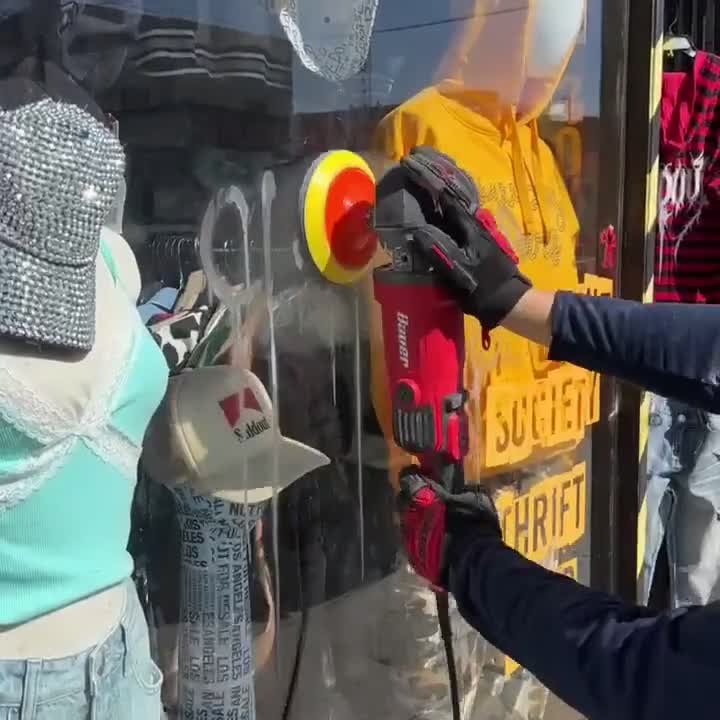
Two kinds of damage, one look from the sidewalk
Acid etching comes from etching cream — a craft-store product that dissolves the surface. It leaves a frosted, milky field with soft edges and drip runs trailing below the letters. Run a fingernail over it and the nail slides with a faint drag, like fine sandpaper.
Scratch graffiti, also called a scratch tag, is mechanical: a key, a screwdriver tip, or a carbide scribe dragged across the pane. Each stroke is a narrow trench with a torn edge. A fingernail drops into it and catches.
Both are holes in the glass. Neither is a coating, so neither washes off with any product sold anywhere. We laid the tests out side by side in acid etching vs scratch graffiti — a fingernail, a flashlight held flat to the pane, and a spray bottle will tell you which one you have in under a minute.
Why removal means resurfacing
There is no filler for glass. Anything poured into a scratch or wiped over an etch has a different refractive index than the pane, so it shows, and it keeps showing. Removal means bringing the surrounding surface down until it meets the bottom of the damage, then restoring the optics of the whole panel with progressively finer stages.
That is why the work is priced per panel rather than per letter. Correcting a metre-wide tag and leaving the rest of the pane untouched produces a visible dish in the glass — the tag is gone and a lens has replaced it. The panel is treated as one surface or it is not treated at all.
The first day matters
Fresh etching cream is still working. Dried paste holds unreacted acid, and every time the spot gets damp again — marine layer, a hose, a window cleaner’s wet rag — the residue starts eating the glass in the same place. A single word on Monday becomes a word plus a haze curtain by the end of the week, and the haze is the part that costs money.
What to do the moment you find it: gloves and eye protection on, flood the area with plenty of clean water, let it run away from you, and stop there. No razor blades, no masonry graffiti remover, no scouring pads — each of those adds a second kind of damage on top of the first. The whole opening-morning routine is in storefront glass graffiti: what to do in the first 24 hours.
What we need to see before quoting
Depth is the whole question, and depth does not travel through a phone call. Photographs settle it:
- the whole panel in frame, so the area to be corrected is obvious;
- a raking shot — camera almost flat against the glass — which makes scratch trenches and etched haze visible;
- a close-up of the deepest-looking stroke.
For scratch tags we will also ask one question you can answer yourself: does your fingernail catch in the line? That is the only reliable depth cue available without being on site, and it moves the estimate more than the size of the tag does.
When the answer is no
Some panels do not come back, and saying so early saves everyone a wasted trip.
- Coated or mirrored glass. Polishing removes the coating along with the damage. If the tag is on the coated face, restoration is not the right call.
- Chips and impact damage. A rock chip is a crater with a cone under it, not a line. Polishing does not close it.
- Applied grilles. Windows with decorative bars glued onto the glass — simulated divided lite — leave no room to bring a head up to the frame without damaging the bars. Those go on the estimate as replacement, as a rule, not as a verdict on the vandalism.
- Very deep scribing on tempered glass. There is a point where the correction needed is more than the panel can give. Where that point sits is covered in how deep is too deep.
Stopping the next one
If the same storefront gets hit repeatedly, the useful move is a sacrificial layer: anti-graffiti film goes on the outside of the glass, takes the next tag, and gets peeled and replaced instead of the pane being reworked. It is not free and it is not invisible, but on a window that gets tagged every few months it changes the arithmetic. Our protection film page covers what that involves.
Handling it yourself
Small etched tags and light scratch work are realistic for a careful owner with proper abrasives. The DIY glass restoration kit is $279; the commercial kit is $499 and carries more discs and more stages for heavier damage. A large tag at eye level on a shopfront pane is the wrong place to learn — that is the panel every customer looks at.
Send photos and we will tell you straight what the glass will and will not do. Call or text 818-356-1345, email info@theglassrestore.com, or start from our acid etched graffiti removal page.