

Every week we get the same call, usually with the same frustrated opening line: “I scrub the shower glass, it looks fine for a few days, and then the white haze is right back.” The homeowner has tried vinegar, magic erasers, three different sprays from the hardware store, and one product a neighbor swore by. Nothing holds. Here is the part nobody tells you: after a certain point, hard water stains on shower glass are no longer a cleaning problem. They are a glass surface problem, and no cleaner on any shelf can fix a surface.
What Hard Water Actually Does to Glass
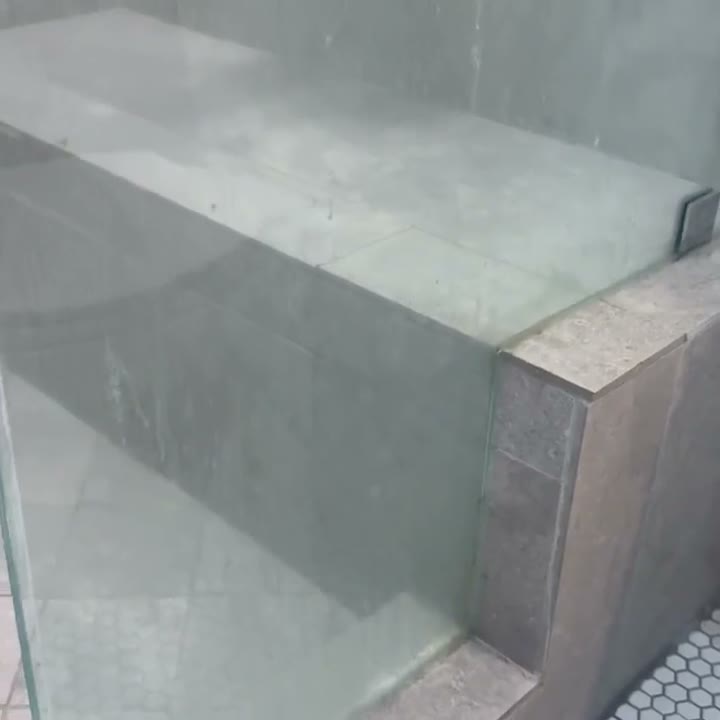
Tap water in most of Southern California carries a heavy load of dissolved minerals — mostly calcium and magnesium. When a water droplet dries on glass, the water evaporates and the minerals stay behind as a thin crystalline deposit. One droplet is invisible. A few hundred shower cycles later, you have overlapping rings of mineral scale bonded to the surface.
That is stage one, and it is still removable. Stage two is where the real trouble starts. Mineral deposits are slightly alkaline, and glass is not as inert as people think. Left in place through months of hot water, steam, and soap chemistry, the deposits begin to interact with the glass itself, leaving microscopic pitting and dulling in the surface. At that point the stain is not sitting on the glass anymore — the damage is in the glass.
Why the Stains Come Back After Every Cleaning
When a customer says the stains “come back,” what usually happened is this: the cleaner dissolved the freshest surface layer of minerals, the glass looked better in the wet, and everyone moved on. Two things were left behind. First, the older, hardened scale that household chemistry cannot touch. Second, the micro-etched texture underneath it. That roughened texture is the reason the problem accelerates — a pitted surface grips new mineral deposits far faster than smooth glass does. Every cycle of “scrub, look fine, haze returns” means the glass is holding water and minerals a little more stubbornly than the time before.
So the honest answer to “why does it keep coming back” is: because part of it never left.
The Cleaners That Make It Worse
A few things we regularly find in customers’ showers that we wish we did not:
- Abrasive pads and powdered scrubs. Green scouring pads and gritty powders can put fine scratches into the glass. Those scratches trap minerals and soap, and they do not come out with any cleaner.
- Strong acid products used blind. Some heavy-duty removers are aggressive enough to attack the glass surface and any protective coating on it, trading one kind of haze for another.
- Razor blades on textured or coated glass. A blade in the wrong hands, on the wrong panel, leaves permanent lines that are far harder to deal with than the spots were.
If a product or tool feels like it is “finally working” through sheer force, stop and look at the surface in raking light. Force is usually the sign you have crossed from cleaning into damaging.
A Simple Test: Deposit or Etching?
Here is the check we do on every walkthrough, and you can do it at home. Clean a small area as well as you can and let it dry completely. Then look at it against the light at a low angle.
- If the haze wipes away when wet and returns identical when dry, and the surface feels rough or chalky — you likely have hardened mineral scale. Removable, but not with household products.
- If the glass is clean to the touch, smooth, and the cloudiness is still there — that is etching. The surface itself is textured now, and no chemical will ever make it clear again. It needs to be mechanically restored: the damaged layer polished flat until the glass is optically smooth.
What Professional Restoration Involves
Restoring etched shower glass is machine work, not chemistry. The panel is polished with progressively finer compounds and pads, keeping the surface flat and the temperature controlled, until the pitted layer is gone and clarity returns. Done right, the glass stays in its frame, the door stays in the bathroom, and there is no demolition, no disposal, and no waiting on a custom panel order. Done wrong — with a random buffing wheel and too much heat — a panel can end up with lensing distortion or worse, which is why we always tell DIYers to match the tool to the job.
For homeowners who like doing this themselves, our DIY glass restoration kit ($279) is built exactly for this: hard water spots, light etching, and minor scratches on shower glass and windows, with a step-by-step system instead of guesswork. Maintenance crews and property teams handling many panels usually run the Commercial kit ($499). And when the etching is deep, the panel is coated, or you simply do not want to gamble on an expensive frameless door — that is what we are for.

Breaking the Cycle
Whether the glass is restored professionally or with a kit, keeping it clear afterward comes down to two habits and one upgrade:
- Squeegee after the last shower of the day. Twenty seconds. Minerals cannot deposit from water that never dries on the glass.
- Rinse soap off the panel, not just yourself. Soap residue holds moisture against the surface and feeds the buildup.
- Protect the surface. A hydrophobic coating applied to freshly restored glass makes water bead and sheet off instead of drying in place. It is the difference between wiping a panel occasionally and fighting it forever.
Frequently Asked Questions
Can vinegar remove hard water stains from shower glass?
On fresh, light deposits — sometimes. On scale that has been building for months, or on glass that is already etched, no. If vinegar was going to solve it, it would have by now.
Is the white haze permanent?
The haze itself is not, but the fix depends on the stage. Mineral scale can be removed; etched glass has to be polished back to optical clarity. A photo of the panel in daylight is usually enough for us to tell you which one you are looking at.
Does hard water damage only shower glass?
No — we restore the same damage on windows hit by sprinkler overspray, glass railings near pools, and storefronts washed by irrigation runoff. Same minerals, same progression, same fix.
If your shower glass keeps fogging back no matter what you clean it with, stop buying sprays and find out what stage the surface is actually in. Text a photo of the panel to 818-356-1345 and we will tell you straight whether it needs cleaning, restoration, or a kit you can run yourself — or see our hard water spot removal and shower door restoration pages for what the service covers.