

When we finish restoring a shower door or a storefront window, the glass looks brand new. The question we hear next is always the same: “How do I keep it like this?” Two things decide that: protective coatings and a couple of simple daily habits. A coating makes the glass easier to keep clean, and the habits keep the minerals from getting a grip in the first place. Here is what we tell our own clients in Los Angeles after a job.

What protective coatings actually do
Under magnification, glass is full of tiny peaks and valleys. Water spreads across it in a thin sheet, and when it dries, its minerals stay behind in those valleys, bond to the glass and eventually etch it.
A hydrophobic (water-repelling) coating fills and seals that microscopic texture with a very thin, invisible layer. Instead of spreading out, water pulls itself into round beads that roll off the glass. Less water stays on the surface, so fewer minerals are left behind, and what does dry sits on top of the coating instead of on the glass itself. That makes it far easier to wipe away.
It is worth being clear about what a coating is not:
- It is not a repair. A coating cannot hide etching, scratches or old hard water damage. Applied over etched glass, it simply seals the damage in. Coatings belong on glass that is already clean and clear, which is why we talk about them after restoration, not instead of it.
- It is not armor. The layer is thinner than a fingerprint. It will not stop a scratch from a ring, a razor or a gritty sponge.
- It is not “never clean again.” Coated glass still gets dirty. It just lets go of the dirt much more easily.
The squeegee habit: why 20 seconds matters
If we could give every shower owner one tool, it would be a squeegee. Hard water spots form when water dries on the glass. Take the water off before it dries, and there is nothing left to form a spot.
Here is the whole routine:
- At the end of your shower, while the glass is still wet and warm, pull a squeegee from top to bottom in overlapping strokes.
- Wipe the blade on a towel between passes so you are not dragging water back across the glass.
- Finish the bottom edge and the corners with a microfiber cloth, where water collects the most.
- Leave the door or the bathroom fan open so the space dries out.
That takes about 20 seconds, far less than scrubbing scale every weekend. On coated glass it works even better, because most of the water has already beaded off.
A few more habits help:
- Switch to liquid body wash. Bar soap leaves a waxy residue that builds up faster and traps minerals.
- Check your water. If you have a water softener, keep it working. In much of Los Angeles the water is hard enough that softened water makes a visible difference on glass.
How often do protective coatings need renewal?
There is no single number, and anyone who promises one is guessing. How long protective coatings last depends on the product, how well the glass was prepared, how hard your water is, and above all how the glass is cleaned.
The glass will tell you when it is time. Do this simple check every so often:
- Splash some water on the glass. If it forms tight, round beads that roll off, the coating is working.
- If the water starts to spread into flat sheets or large, lazy puddles, especially in the spray zone at chest height, the coating is wearing thin.
- If spots start forming again even though you squeegee, it is overdue.
Before renewing, the glass must be completely clean. If light mineral scale has started to come back, remove it first. Our article on why hard water stains keep coming back on shower glass covers safe ways to do that.
What voids the effect of a coating
Most coatings fail early for the same few reasons:
- Abrasive cleaners. Scouring powder, “magic” melamine sponges, the green side of a kitchen sponge and steel wool scrub the coating right off. Use a soft microfiber cloth or a non-scratch pad.
- Harsh chemicals. Strong alkaline cleaners and bleach-based bathroom sprays break coatings down. A mild pH-neutral cleaner or diluted dish soap is enough for coated glass.
- Razor blades. A blade removes a coating in a single pass, and on tempered shower glass it can also leave scratches.
- Applying over dirty or etched glass. The coating bonds to whatever is on the surface. If that is soap film or scale, the coating comes off with it.
- Letting water sit. Water left to dry every day still leaves minerals behind. Coating plus squeegee is the combination that works.
When habits are not enough
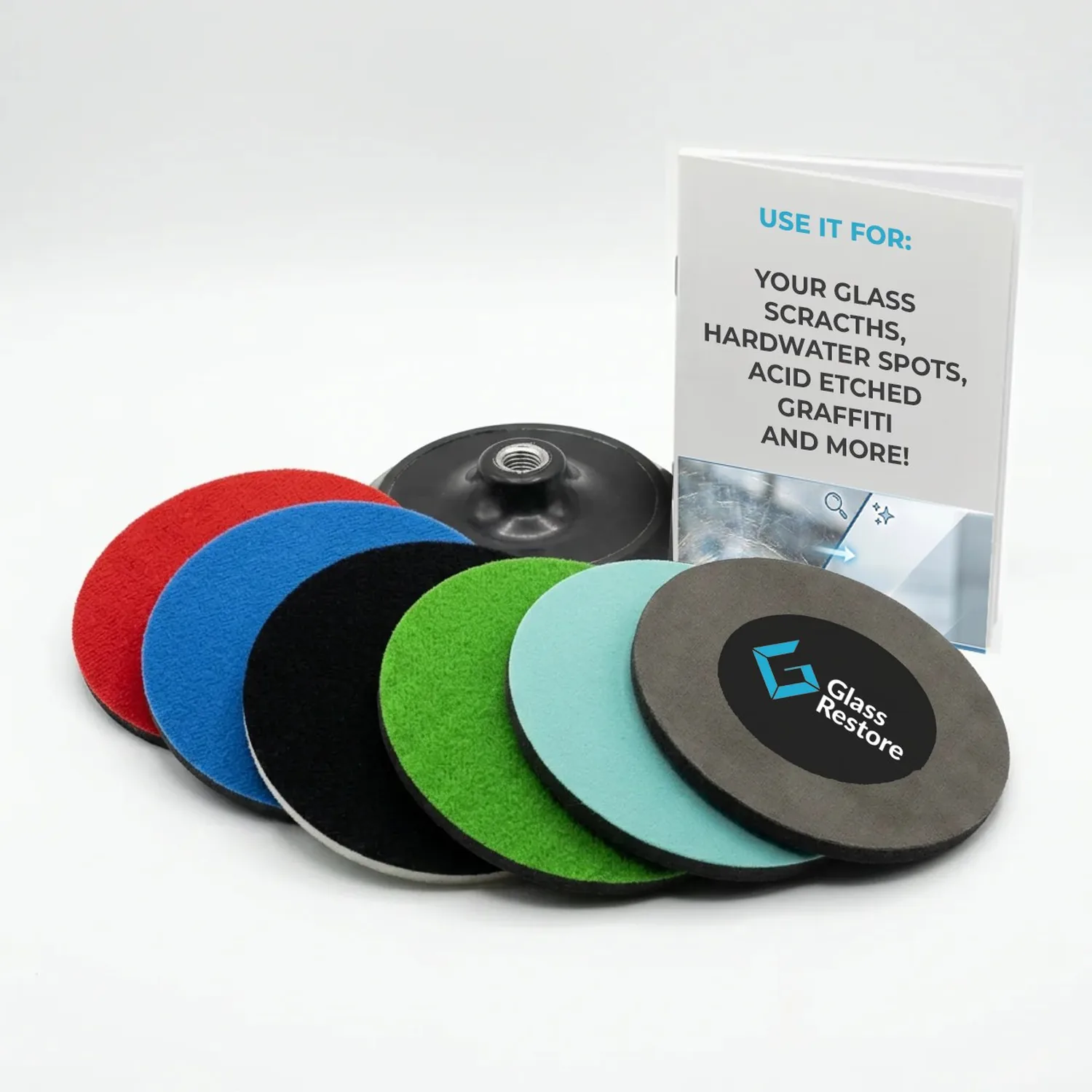
If your glass is already hazy and the haze does not go away when it is wet, a coating and a squeegee will not bring it back. That is etching, and it has to be polished out before any protection makes sense. If you are comfortable doing careful work yourself, our DIY glass restoration kit ($279) covers light etching and stubborn scale. Property managers and cleaning crews looking after many doors or windows usually choose the commercial scratch, acid graffiti and hard water kit ($499).
For heavier damage, or if you simply want it done right the first time, our team handles shower door glass restoration and hard water spot removal across Los Angeles.
Want your glass to stay clear?
Send us a photo of your shower door or windows, one wet and one dry, and we will tell you whether it needs restoration first or is ready for protection right away. Call or text 818-356-1345, or learn more about our hard water spot removal service.