

If your storefront gets tagged once, it is bad luck. If it gets tagged every few months, it is a pattern, and patterns deserve a plan. For shops on busy corners, bus lines and late-night blocks, the most practical plan we know is sacrificial anti-graffiti film: a clear protective layer applied to the glass so that the next marker, rock scratch or acid etch lands on the film instead of on your window. When the film is damaged, it comes off and a fresh sheet goes on. The glass underneath stays as it was.
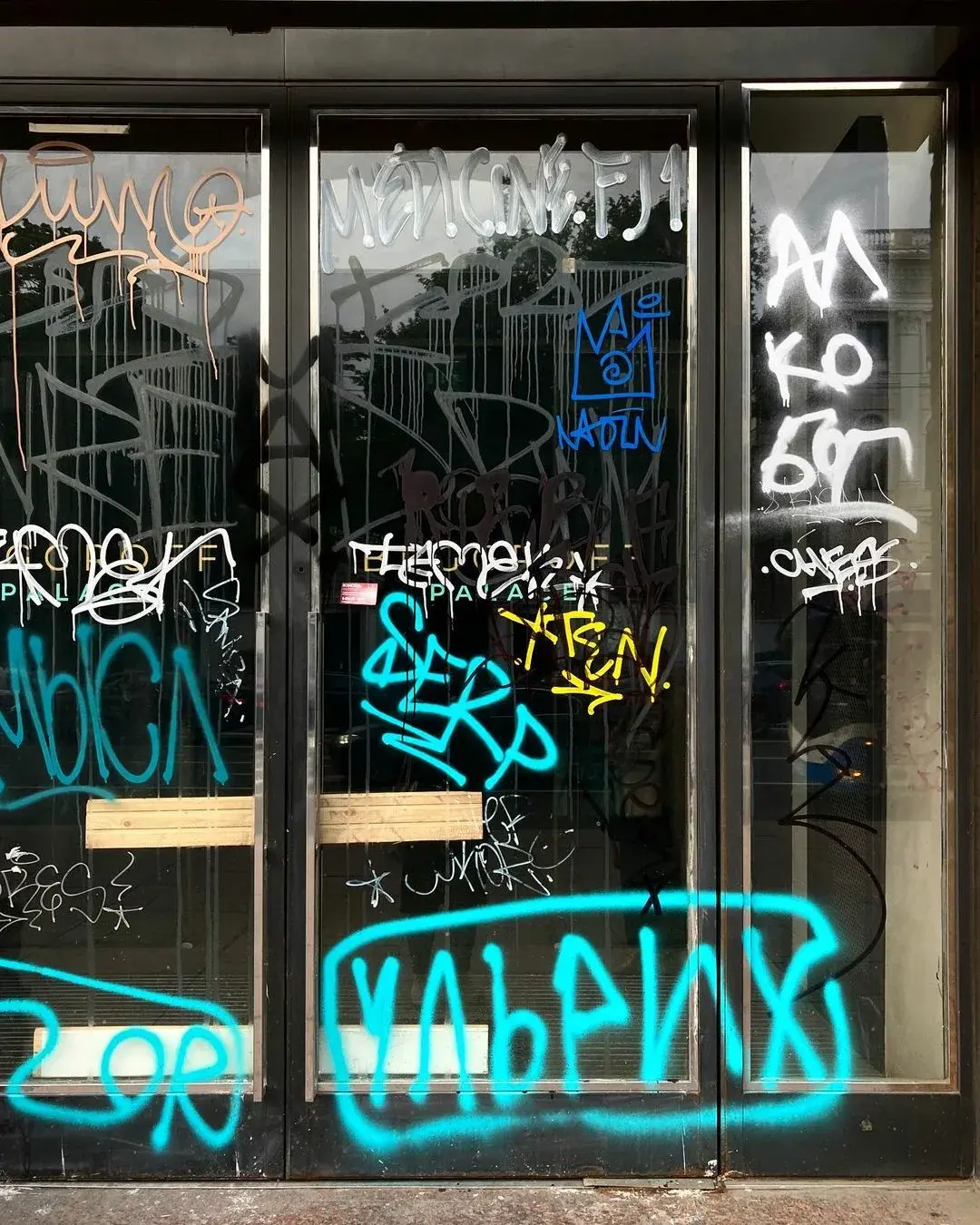
How sacrificial anti-graffiti film works
You give the vandal something to damage that is not the glass. The film is an optically clear polyester sheet with an adhesive layer, installed on the outside face of the pane, where graffiti happens. From the sidewalk the storefront looks the same. The difference shows up the next time someone leaves a mark.
Here is what the film absorbs:
- Scratch tags (“scratchiti”). Keys, rocks, diamond-tip scribes and grinding stones cut into the film. On bare glass the same tag means polishing out a scratch; on film it means peeling a sheet.
- Acid etching. Etching creams and hydrofluoric-based markers attack glass chemically and leave a frosted scar. On film, the acid eats into the film layer instead of the pane.
- Paint and marker. Spray paint and paint markers usually clean off film with the right solvent. If they do not, the film is simply replaced.
- Stickers and adhesive residue. Sticker bombing comes off film without anyone scraping the glass itself.
The film takes the hit instead of your glass.
Anti-graffiti film vs repeated restoration
We restore etched and scratched glass every week, and restoration is a good option. For a storefront that gets hit once in a long while, acid-etched graffiti removal or scratch polishing is the right answer: you remove the damage and move on. There is no reason to wrap a window that is rarely targeted.
The math changes when the same glass gets tagged again and again. Every restoration removes a thin layer of the glass surface. Done well, that is invisible. Done over and over on the same spot, it adds up, and deep damage in the same area makes each round of polishing more work. Film breaks that cycle. Instead of taking material off the glass each time, you remove and replace a layer that was designed to be thrown away.
A practical way to decide:
- Tagged rarely, glass currently clean: restoration when it happens, no film needed.
- Tagged repeatedly, same windows, same corner: restore the glass once, then protect it with film so the next tag lands on the film.
- Brand-new or freshly restored glass in a high-risk spot: film first, before the first tag arrives.
One important point: film should go on clean, undamaged glass. If there is existing etching or scratching, it will show through the film. The right order is to restore the storefront glass first, then install the protective layer on a clean surface.

What anti-graffiti film cannot protect against
Film is a shield, not armor, and it is worth being honest about the limits:
- It is not a security film in the break-in sense. A standard anti-graffiti film is thin. It holds scratches and chemicals away from the glass, but it is not designed to stop a brick or a smash-and-grab. Thicker security films exist for that purpose, and they are a separate conversation.
- It does not fix damage that is already there. Etching, scratches and hard water marks under the film stay visible. Restore first, film second.
- It does not protect frames, walls or doors. Only the glass area that is covered is protected. Metal mullions, door hardware and stucco need their own coatings.
- It will not stop a very deep cut. A tool pressed hard enough can go through the film and reach the glass. Rare with typical tags, but possible.
- It is not permanent. Sun, weather and cleaning slowly wear any film. Plan on replacing it over the life of the storefront, not just after vandalism.
How replacing the film itself goes
This part is undramatic. When a panel of film gets tagged, the damaged sheet is peeled off, the glass underneath is cleaned of adhesive, and a new sheet is cut to size and installed. No polishing, no dust, no chemicals on the glass. The storefront stays usable around the work.
A few habits make replacement easier:
- Keep a photo record. Snap each tag before it is touched.
- Replace damaged sheets promptly. Tags that stay up tend to attract more tags. A clean storefront gets hit less.
- Clean the film gently. Soft cloth, non-abrasive glass cleaner, no razor blades or scouring pads. Scraping film to remove a sticker defeats the purpose.
- Know which panes are filmed. If you only protected the lower panes, make sure whoever cleans the windows knows the difference.
Doing it yourself vs calling us
If you already have light etching or scratches and want to handle them in-house, our Commercial Glass Restoration Kit ($499) is built for storefront work, and the DIY Glass Restore Kit ($279) covers smaller residential jobs. Film installation is a different skill — clean cutting, bubble-free application, the right film for the exposure — and for most shop owners it is worth handing to a crew.
You can read more about our window protection film service, and if you were just tagged and need to act now, start with our guide to what to do with storefront graffiti in the first 24 hours.
Get an answer for your storefront
Every storefront is different: how often it is hit, which panes take the damage, and whether the glass needs restoring before any film goes on. The fastest way to find out is to send us a photo. Call or text 818-356-1345, or visit our storefront glass restoration page and tell us what you are dealing with. We will tell you honestly whether you need restoration, film, or both.